Don't miss our holiday offer - 20% OFF!

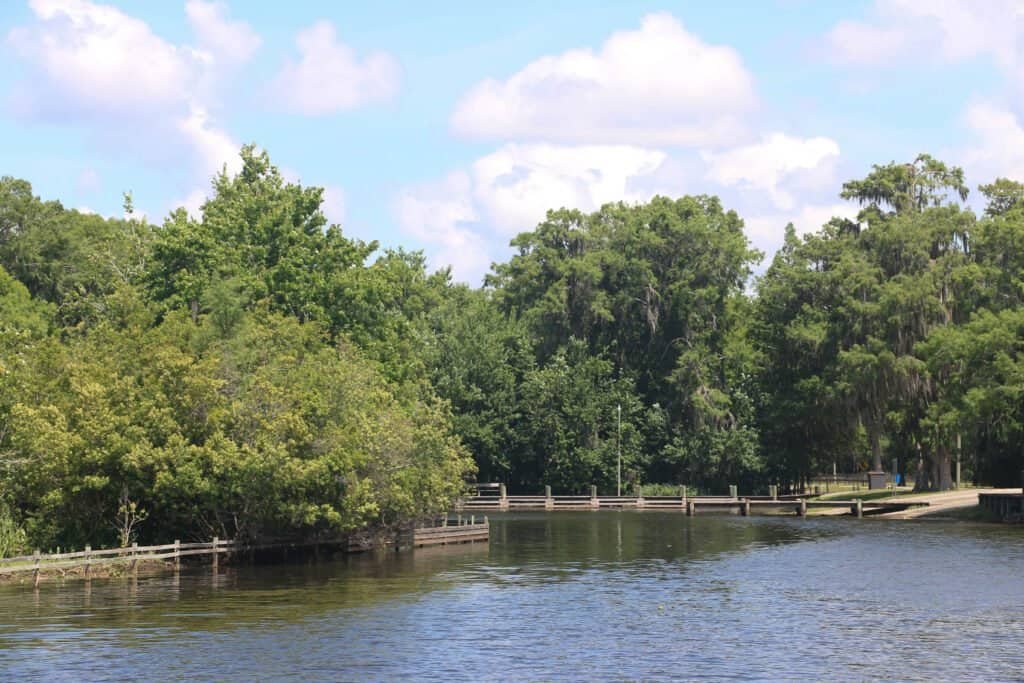
Known for expansive grass flats, shallow structure, submerged vegetation, and aggressive feeding fish, Lake Istokpoga attracts local anglers, tournament fishermen, and visiting bass anglers from across the country. At Great Outdoors Shops, many of the fishing baits and tackle we carry are selected specifically for the type of heavy-cover fishing and warm-water conditions anglers encounter on lakes like Istokpoga. From swim jigs and soft plastics to panfish tackle and seasonal bait selections, this guide was created to help anglers better understand how to fish one of Central Florida’s most productive freshwater lakes.
Fishing Conditions at Lake Istokpoga
Lake Istokpoga is a large, relatively shallow lake dominated by vegetation and grass structure. The lake contains:
- Kissimmee grass
- Hydrilla
- Lily pads
- Submerged vegetation
- Offshore grass lines
- Shallow spawning areas
These conditions create excellent habitat for:
- Largemouth bass
- Crappie
- Bluegill
- Shellcracker
Water clarity can vary depending on weather, rainfall, and seasonal vegetation growth, which means bait selection and presentation styles often change throughout the year.
The lake’s vegetation-heavy environment makes it one of the best fisheries in Florida for anglers who enjoy fishing grass edges, flipping cover, and targeting bass in shallow water environments.
Where Bass Hold on Lake Istokpoga
Finding bass on Lake Istokpoga requires more than locating a shoreline covered in vegetation. With thousands of acres of shallow water, expansive grass beds, lily pads, and submerged aquatic vegetation, the lake offers seemingly endless places for largemouth bass to hide and feed.
The challenge is identifying the specific features that concentrate fish within those large areas of habitat.
Successful anglers often look for transitions, irregularities, changes in vegetation, available forage, and water movement. These features can create feeding opportunities and provide bass with the cover they need to ambush prey.
Understanding where bass are likely to position themselves throughout Lake Istokpoga can help anglers spend less time searching and more time fishing productive water.
Shoreline Grass and Emergent Vegetation
Shoreline vegetation is one of the most recognizable features of Lake Istokpoga. Kissimmee grass, bulrushes, reeds, and other emergent vegetation provide cover for largemouth bass while supporting populations of baitfish, insects, and other aquatic organisms.
However, not every stretch of shoreline vegetation holds the same number of fish.
Bass frequently position themselves around irregularities in the vegetation rather than along uninterrupted grass lines. Points extending into open water, pockets within grass beds, isolated clumps, and transitions between different vegetation types can all create productive feeding locations.
Pay particular attention to areas where two types of vegetation meet. A transition between Kissimmee grass and submerged vegetation, for example, can provide multiple forms of cover within a relatively small area.
Water depth also matters. Vegetation growing near slightly deeper water may offer bass convenient access to feeding areas and nearby refuge when conditions change.
What to look for:
Points extending from shoreline grass beds
Pockets and openings within dense vegetation
Isolated grass clumps separated from larger beds
Transitions between reeds, bulrushes, and submerged grass
Vegetation adjacent to changes in water depth
Rather than fishing an entire shoreline at the same pace, slow down when these features appear.
Lily Pads and Surface Vegetation
Lily pads and other surface vegetation provide shade, overhead cover, and feeding opportunities for largemouth bass. These areas can be especially productive during warmer conditions when fish seek shelter beneath vegetation.
On Lake Istokpoga, large expanses of pads may appear uniform, but the most productive locations often contain subtle differences.
Open holes within pad fields allow bass to move vertically through the vegetation to strike passing prey. Narrow lanes, irregular edges, and isolated patches can create similar feeding opportunities.
The outside edges of pad fields are particularly useful starting points because they allow anglers to cover water efficiently while identifying areas that deserve closer attention.
Interior pockets may also hold fish, especially where sufficient water depth and open space beneath the vegetation allow bass to move and feed.
Look for signs of activity, including moving pads, baitfish disturbances, and occasional surface strikes.
What to look for:
Open holes surrounded by lily pads
Narrow lanes through surface vegetation
Irregular outside edges
Isolated pad patches
Pad fields bordering submerged grass or deeper water
Topwater frogs, weedless soft plastics, and Texas-rigged baits are common presentations for exploring these areas.
Submerged Grass and Outside Grass Lines
Submerged aquatic vegetation is another important component of Lake Istokpoga’s bass habitat. Where present, vegetation such as hydrilla and other submerged grasses can create underwater cover that is not always visible from the surface.
These grass beds can provide bass with protection while attracting baitfish and other forage.
One of the most useful features to locate is the outside grass line, where submerged vegetation transitions into more open water.
Bass may position themselves along these edges to intercept passing prey, particularly when nearby water depth, wind direction, or baitfish activity creates favorable feeding conditions.
Irregularities along submerged grass lines can be especially productive. Points, indentations, isolated patches, and openings may concentrate fish that would otherwise be scattered throughout a larger grass bed.
Changes in grass density are also worth investigating. A transition from thick vegetation to scattered grass can create an effective feeding area while allowing anglers to work a variety of presentations.
What to look for:
Outside edges of submerged grass beds
Points and pockets along grass lines
Open holes within vegetation
Isolated grass patches
Transitions between thick and sparse vegetation
Areas showing baitfish activity
Paddle-tail swimbaits, swim jigs, Texas-rigged worms, and other weedless presentations can be effective tools for exploring submerged vegetation.
Creek Mouths, Canals, and Moving Water
Although vegetation dominates much of the fishing conversation surrounding Lake Istokpoga, moving water can also influence bass location and feeding behavior.
Creek mouths, canals, drainage connections, and other areas where water enters or leaves the lake may create feeding opportunities when water is actively moving.
Current can carry food and concentrate baitfish around vegetation edges, channel openings, and nearby structure. Bass may position themselves in areas with reduced current while remaining close enough to intercept prey.
Following periods of rainfall, some inflow areas may become more active. However, the amount and direction of water movement depend on rainfall, water levels, and water-management operations.
Anglers should also pay attention to changes in water clarity. Where stained incoming water meets clearer lake water, the transition may create an additional feeding opportunity.
What to look for:
Active water movement near creek mouths
Vegetation adjacent to canal openings
Current breaks and protected pockets
Changes in water clarity
Baitfish activity near flowing water
Depth transitions near connecting waterways
Moving water does not automatically guarantee productive fishing, but when current, vegetation, and available forage come together, these areas deserve attention.
Offshore Vegetation and Open-Water Structure
One mistake anglers can make on Lake Istokpoga is concentrating exclusively on visible shoreline cover.
Although Istokpoga is relatively shallow, bass are not restricted to shoreline vegetation. Offshore grass beds, isolated vegetation patches, subtle bottom changes, and open-water feeding areas can all provide opportunities away from the bank.
Offshore vegetation can be particularly valuable when it offers a combination of cover, access to open water, and available forage.
Because the lake lacks the dramatic depth changes found in many reservoirs, relatively small differences in bottom contour or vegetation growth can become important.
An isolated patch of submerged grass surrounded by open water may attract fish. Similarly, an irregular outside edge of an offshore grass bed may provide a natural feeding route.
Wind can also influence these areas by moving surface water and concentrating baitfish along particular edges.
What to look for:
Isolated offshore grass beds
Irregular submerged vegetation edges
Small changes in bottom depth
Hard-bottom areas or bottom transitions
Baitfish concentrations away from shore
Wind-influenced vegetation edges
Electronics can be useful for locating submerged vegetation, identifying subtle depth changes, and finding baitfish that may not be visible from the surface.
Putting These Locations Together
The most productive areas on Lake Istokpoga often contain more than one favorable feature.
A grass point extending toward slightly deeper water may offer better opportunities than an uninterrupted shoreline. A submerged grass bed near a creek mouth may become productive when moving water attracts forage. A lily pad field bordering an outside grass line may provide both overhead cover and nearby feeding opportunities.
Rather than focusing on one feature alone, look for places where vegetation, water depth, forage, and changing conditions intersect.
This approach helps narrow the search on a large lake and provides a practical starting point for choosing the right fishing technique.
Once a promising area has been located, the next step is selecting a bait that can effectively reach and work through that particular type of cover.
Bass Fishing at Lake Istokpoga
Bass fishing is the primary reason many anglers visit Lake Istokpoga. The lake has long been known for producing quality  largemouth bass, including trophy-class fish during spawning periods and stable feeding conditions.
Some of the most productive fishing techniques on Istokpoga include:
Swim Jig Fishing
Swim jigs are one of the best bait categories for covering water around vegetation and grass edges. These baits work especially well:
- Along submerged grass lines
- Around lily pad edges
- In scattered vegetation
- During active feeding periods
Natural baitfish colors, shad patterns, black and blue, and bluegill-inspired colors often perform well depending on water clarity.
Explore:
- Florida Swim Jigs
- Bass Jig Trailers
Texas-Rigged Soft Plastics
Texas-rigged worms and creature baits remain staples for Lake Istokpoga bass fishing. These presentations allow anglers to work through vegetation while maintaining a natural bait profile.
Popular soft plastic choices include:
- Stick worms
- Creature baits
- Beaver-style baits
- Ribbon tail worms
Effective colors often include:
- Junebug
- Watermelon red
- Black and blue
- Green pumpkin
Explore:
- Soft Plastic Worms
- Florida Bass Fishing Baits
Frog Fishing
Topwater frog fishing can become extremely productive during warmer months and periods of dense vegetation growth. Early morning and low-light periods often produce aggressive strikes around:
- Lily pads
- Thick grass mats
- Shoreline vegetation
Spinnerbait Fishing
Windy conditions on Lake Istokpoga can create excellent spinnerbait opportunities. Spinnerbaits perform well when bass are actively feeding around moving baitfish and vegetation edges.
Colorado/willow combinations are especially effective for covering water while maintaining vibration and flash.
Crappie & Panfish Fishing at Lake Istokpoga
While bass fishing receives most of the attention, Lake Istokpoga also supports strong seasonal crappie and panfish fishing.
During cooler months, anglers commonly target:
- Crappie
- Bluegill
- Shellcracker
Popular panfish techniques include:
- Small tube jigs
- Hair jigs
- Live minnows
- Ultralight soft plastics
Brush piles, vegetation edges, canals, and deeper structure often become productive holding areas during seasonal transitions.
Explore:
- Panfish Baits
- Crappie Fishing Plastics
Best Fishing Baits for Lake Istokpoga
Fishing Lake Istokpoga successfully often means selecting baits capable of handling Florida vegetation, warm water conditions, and aggressive fish.
At Great Outdoors Shops, some of the most productive bait styles for Istokpoga include:
Swim Jigs
Ideal for:
- Grass edges
- Covering water
- Active bass
- Vegetation fishing
Stick Worms
Excellent for:
- Slow presentations
- Spawning bass
- Dock edges
- Vegetation openings
Creature Baits
Highly effective for:
- Flipping heavy cover
- Grass punching
- Thick vegetation
Panfish Plastics
Great for:
- Crappie fishing
- Bluegill fishing
- Cooler water conditions
Spinnerbaits
Best during:
- Windy conditions
- Active feeding periods
- Stained water conditions
Seasonal Fishing Patterns at Lake Istokpoga
Spring Fishing
Spring is one of the strongest fishing periods on Lake Istokpoga. Bass move shallow during spawning activity, and aggressive feeding behavior often develops around vegetation and shallow flats.
Weightless worms, swim jigs, and moving baits become especially productive.
Summer Fishing
Summer fishing often centers around:
- Early morning feeding windows
- Offshore grass lines
- Deeper vegetation
- Shaded cover
Reaction baits and slower soft plastic presentations both play important roles depending on conditions.
Paddle-tail swimbaits are another strong choice when bass are feeding around submerged vegetation. The Baitlicious Swagger Shad 4.5″ Swimbait provides a larger baitfish profile with a jointed body and saucer-style tail that produces plenty of movement while being retrieved along grass edges and through open pockets.
Fall Fishing
Fall transitions often trigger increased baitfish movement and more aggressive feeding behavior. Wind-blown shorelines and vegetation transitions can become productive feeding zones.
When bass are holding deeper in vegetation or along outside grass lines, don’t overlook a larger Texas-rigged worm. A 10-Inch Streamer Tail Worm provides a substantial profile while the long tail adds movement as the bait falls and works through cover. It’s a particularly good option when targeting better-quality bass rather than simply generating numbers of bites.
Winter Fishing
Winter conditions can improve crappie fishing significantly while bass remain active during stable warming trends and sunny conditions.
When fishing pressure or changing conditions call for something different, compact finesse presentations can produce fish that have seen countless conventional worms and creature baits. The Baitlicious Nerve Ball has a compact center body surrounded by 20 flexible spike-like tentacles, creating movement with very little angler input. Its unusual profile makes it an option for finesse presentations around grass edges, openings in vegetation, docks, and other high-percentage areas.
Mobile Tackle Support Near Lake Istokpoga
Great Outdoors Shops Mobile Tackle Store supports anglers fishing throughout Highlands County and Central Florida, including areas surrounding Lake Istokpoga.
Depending on season and availability, offerings may include:
- Soft plastics
- Swim jigs
- Panfish tackle
- Terminal tackle
- Seasonal lure selections
- Live bait
Our mobile tackle operations help us stay connected to changing local fishing conditions and the types of baits anglers are actively using on area lakes.
Related Florida Fishing Resources
Additional local fishing resources continue to be added, including:
- Highlands County Fishing Guide
- Sebring Fishing Tackle Guide
- Lake Placid Fishing Guide
- Florida Bass Fishing Tips
- Swim Jig Fishing Guides
- Seasonal Fishing Reports
Why Florida-Tested Baits Matter
Florida bass fishing places unique demands on fishing tackle. Heavy vegetation, warm water temperatures, shallow structure, and year-round fishing pressure require baits capable of performing in real fishing conditions.
That is why Florida-tested baits matter.
At Great Outdoors Shops, our focus is on practical fishing performance for:
- Florida vegetation fishing
- Heavy-cover bass fishing
- Warm-water durability
- Natural bait movement
- Central Florida fisheries
Many of the baits we carry are selected specifically for the type of fishing anglers encounter on Lake Istokpoga and surrounding Florida lakes.
Explore More Lake Istokpoga Fishing Resources
Whether you are targeting trophy bass, seasonal crappie, or simply exploring one of Florida’s most productive freshwater fisheries, Lake Istokpoga offers outstanding year-round fishing opportunities.
Explore Local Fishing Guides
Shop Florida-Tested Fishing Baits
View Mobile Tackle Schedule