Don't miss our holiday offer - 20% OFF!

Choosing the best redfish lure color doesn’t need to mean carrying dozens of nearly identical baits. 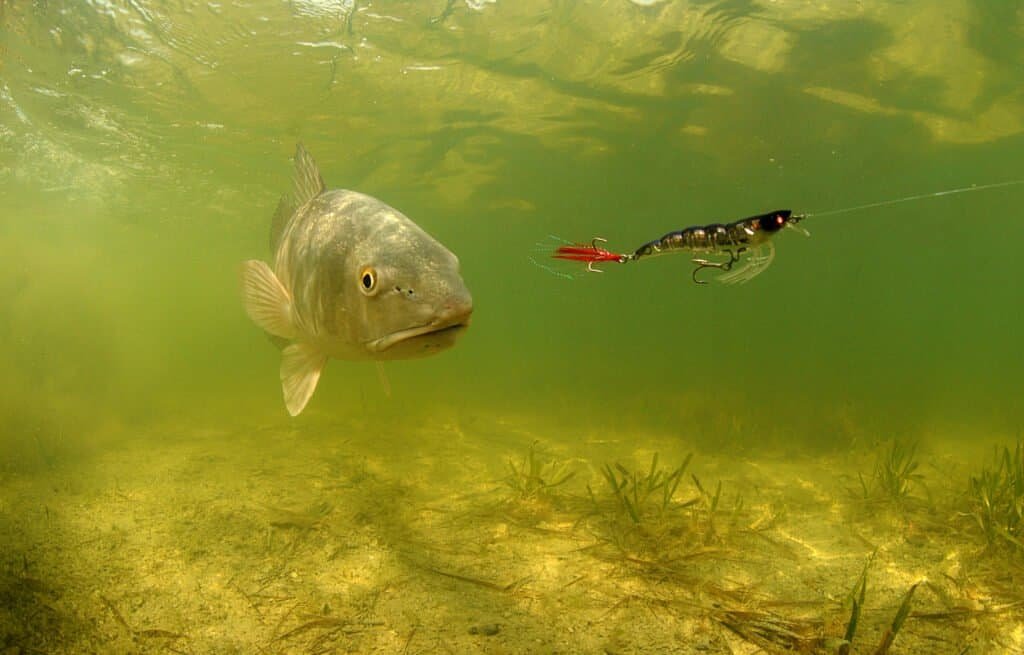
Redfish feed on shrimp, crabs, mullet, pinfish, mud minnows, and other small baitfish throughout Florida’s inshore waters. The most effective lure color usually isn’t determined by one universal “best” pattern. It depends on water clarity, available light, forage, bottom composition, and the amount of contrast needed for a redfish to locate your lure.
In clear water and bright conditions, natural colors can closely imitate the forage redfish are already feeding on. As water becomes stained or dirty, stronger contrast, darker silhouettes, brighter accents, and additional flash can make an artificial lure easier to find.
The goal isn’t necessarily to make your lure look prettier.
It’s to make it look natural enough—or stand out enough—for the conditions you’re fishing.
Does Lure Color Really Matter for Redfish?
Yes, but probably not as much as some anglers believe.
Lure color can influence how easily a redfish sees a bait and how closely that presentation resembles natural forage. But color can’t compensate for fishing where there aren’t any fish or presenting the wrong lure for the situation.
A perfectly colored paddle tail retrieved three feet above redfish feeding on crabs along the bottom probably won’t outperform a less-perfect crab imitation placed directly in front of them.
Think about lure selection in this order:
Location → Presentation → Lure Style → Size → Color
First, find the redfish.
Next, determine how they’re feeding.
Then choose a lure that fits the habitat and forage.
Finally, use color to fine-tune the presentation.
That keeps color selection in perspective while still taking advantage of the difference it can make.
Best Redfish Colors for Clear Water
Clear water gives redfish plenty of opportunity to inspect an artificial lure.
That’s generally a good time to begin with natural and subtle colors that resemble the shrimp, crabs, and baitfish already living in the area.
Good clear-water choices include:
- Pearl
- White
- Silver
- Natural shrimp
- Green pumpkin
- Watermelon
- Translucent baitfish colors
- Subtle gold or silver flake
The exact choice depends partly on the lure.
A translucent paddle tail with subtle flash may closely resemble a small baitfish, while green pumpkin or natural brown can make an excellent crab or bottom-oriented presentation.
Why Natural Colors Work
In clear water, redfish don’t need a lure to announce its presence from a great distance.
They’re able to see details more easily.
Overly bright colors can certainly still catch fish, but natural patterns often provide a convincing presentation when redfish are pressured or have time to inspect the bait.
Fishing Tip: The clearer and calmer the water, the more attention you should give to a natural presentation—not only color, but lure size, movement, and rigging.
Best Redfish Colors for Stained Water
Much of Florida’s productive inshore water isn’t crystal clear.
Tannins, wind, tidal movement, rainfall, suspended sediment, and natural bottom composition can create stained water where visibility is reduced without becoming completely muddy.
This is where slightly stronger colors and contrast can become valuable.
Consider:
- Root beer
- Gold
- Copper
- Dark green
- Junebug
- Purple
- Chartreuse accents
- Pearl with chartreuse
- Dark natural colors with flake
The idea isn’t necessarily to abandon natural colors.
Instead, add enough contrast, flash, or visibility to help the fish locate the lure.
A root beer paddle tail with gold flake, for example, can maintain a relatively natural profile while producing additional flash.
Best Redfish Colors for Dirty or Muddy Water
When visibility becomes poor, subtle details become less important.
Now the goal is often to create a lure redfish can detect through contrast, silhouette, vibration, or flash.
Dark colors can be surprisingly effective.
Try:
- Black
- Black and blue
- Dark purple
- Junebug
- Dark brown
- Chartreuse
- Gold
- High-contrast combinations
Many anglers automatically reach for the brightest lure in dirty water, but darker colors can create a stronger silhouette.
Think about looking at an object through fog. Fine details disappear, but a strong outline remains visible.
The same basic principle can help explain why black and other dark colors continue producing fish under low-visibility conditions.
Don’t Forget Vibration
Color is only part of the equation in dirty water.
A paddle tail producing vibration or a spoon creating flash and movement may be easier for a redfish to locate than a subtle lure that depends primarily on appearance.
When visibility drops, think about how the fish will find the lure, not just what color it is.
Best Redfish Colors in Low Light
Early morning, late evening, heavy cloud cover, and approaching storms can create low-light conditions even when the water itself remains relatively clear.
This is another situation where silhouette becomes important.
Dark colors such as:
- Black
- Dark purple
- Junebug
- Dark green
- Black with contrasting accents
can produce a strong outline against the lighter sky or surface.
This principle is particularly useful with topwater lures.
A dark topwater may appear extremely unnatural sitting in your hand, but the redfish below isn’t necessarily looking at the same thing you are.
It’s looking upward at a silhouette moving across the surface.
Fishing Tip: Choose lure colors based on what the fish sees underwater, not what looks most realistic inside the tackle box.
Best Redfish Colors in Bright Sun
Bright sunlight—particularly when combined with clear water—often favors natural colors and subtle flash.
Good choices include:
- Pearl
- White
- Silver
- Translucent baitfish patterns
- Natural shrimp colors
- Green pumpkin
- Watermelon
- Subtle gold
- Fine metallic flake
Bright sun can illuminate an artificial lure extremely well, so excessive contrast isn’t always necessary.
This is especially true when redfish are fishing-pressure sensitive or holding in shallow, clear water.
Natural colors combined with a controlled presentation can be more effective than something excessively bright.
Choosing Colors to Match Baitfish
When redfish are feeding on mullet, pinfish, pilchards, mud minnows, or other small fish, choose colors that reproduce the general appearance of the available forage.
You don’t need a perfect photographic match.
Instead, consider four characteristics:
- Overall color
- Belly color
- Flash
- Silhouette
Pearl and white are excellent general baitfish colors because many forage species have lighter undersides.
Silver or gold flake can imitate the flash produced by baitfish scales.
Darker backs combined with lighter bellies can create a familiar baitfish profile.
When you’re surrounded by small finger mullet, lure size and profile may actually matter more than perfectly duplicating their exact color.
Choosing Shrimp Colors for Redfish
Live shrimp aren’t always one uniform color.
Their appearance can range from nearly translucent to gray, brown, olive, tan, and other subtle shades depending on species, habitat, and conditions.
Effective shrimp imitation colors can include:
- Natural translucent
- Clear with flake
- Pearl
- Gray
- Light brown
- Root beer
- Green pumpkin
In clean water, start natural.
As visibility decreases, consider darker colors, brighter accents, or additional flash.
A chartreuse accent can also make a shrimp imitation easier to locate in stained water without completely changing the natural profile.
Choosing Crab Colors for Redfish
Redfish frequently feed on small crabs around oyster bars, grass flats, mangroves, and marshes.
Crab imitations generally benefit from colors that resemble the bottom and natural crustaceans.
Good starting choices include:
- Green pumpkin
- Brown
- Olive
- Tan
- Dark green
- Natural crab patterns
- Black or dark purple in poor visibility
When sight casting to a tailing redfish, presentation is usually far more important than finding an exact crab color.
Get the lure into the fish’s feeding path, allow it to settle naturally, and avoid excessive movement.
A perfectly colored crab landing on the fish’s head will probably accomplish less than an imperfect color placed several feet ahead of it.
Does Chartreuse Work for Redfish?
Absolutely.
Chartreuse is one of the most popular accent colors in inshore fishing because it increases visibility without requiring the entire lure to be extremely bright.
Chartreuse can be particularly useful in:
- Stained water
- Dirty water
- Cloudy conditions
- Low-light situations
- Areas with reduced visibility
One of the most versatile combinations is a relatively natural body with a chartreuse tail.
This gives anglers both a familiar forage profile and a highly visible target.
But chartreuse isn’t mandatory.
If fish are responding well to natural colors, there’s no reason to change simply because another angler says every redfish lure needs chartreuse.
Gold vs. Silver for Redfish
Both can catch redfish, but water conditions can help determine where to start.
Gold
Gold is a classic redfish color and is particularly popular in stained, tannic, and darker water.
Gold spoons have caught redfish in Florida for generations, and gold flake can provide similar warm flash in soft plastics.
Silver
Silver produces a brighter, cleaner flash and can work extremely well when imitating baitfish in clearer water.
Neither is a hard rule.
The better way to think about metallic colors is:
Gold for warmer, darker flash.
Silver for brighter baitfish flash.
Let the water conditions and available forage determine which you try first.
Best Paddle Tail Colors for Redfish
Paddle tails are among the most versatile redfish lures, so carrying a small selection of complementary colors can cover an enormous range of conditions.
You don’t need twenty.
A practical selection might include:
Natural Baitfish
For clear water and active baitfish.
Pearl or White
A versatile choice across a wide range of conditions.
Green Pumpkin or Natural Dark
Useful around grass, oysters, and bottom-oriented fish.
Root Beer or Gold Flake
Excellent for stained water.
Dark High-Contrast Color
For dirty water and low visibility.
Chartreuse Accent
For additional visibility when needed.
With those basic categories, anglers can adjust to most Florida inshore conditions without carrying every color on the tackle-shop wall.
Best Topwater Colors for Redfish
Topwater color works somewhat differently because redfish often view the lure primarily from underneath.
That makes silhouette and contrast particularly important.
Low Light
Black and other dark colors create strong silhouettes against the surface.
Bright Conditions
White, bone, silver, and natural baitfish patterns are excellent choices.
Around Active Mullet
Match the approximate size and profile of the bait while using natural or reflective patterns.
Don’t become overly concerned about intricate markings on the top of a surface lure.
The redfish underneath may never see them.
Focus on the belly, silhouette, movement, sound, and overall profile.
How Bottom Color Influences Lure Selection
Water clarity isn’t the only visual factor.
Bottom composition can dramatically change how a lure appears.
A dark green lure over thick seagrass may blend into the background, while the same lure crossing a bright sandy pothole creates obvious contrast.
Likewise, a light-colored bait can stand out dramatically against dark mud or grass.
This gives anglers another choice:
Blend in or stand out.
When fish are pressured or water is extremely clear, blending naturally with the environment can be effective.
When visibility is reduced or fish are feeding aggressively, additional contrast may help them locate the lure.
Pay attention to what’s underneath your lure—not just the water surrounding it.
Lure Color and Fishing Depth
Color changes as light penetrates water.
The deeper a lure travels, the less available light there is to illuminate it. Water clarity, suspended material, cloud cover, and depth all influence how visible individual colors remain.
For shallow-water redfish, this effect may be relatively minor compared with anglers fishing significantly deeper offshore water.
But when targeting redfish along deeper channels, bridges, creek holes, or drop-offs, contrast and lure visibility become increasingly important.
Again, don’t obsess over exact colors.
Think about whether your lure provides enough visibility for the conditions.
When Should You Change Lure Colors?
Don’t change colors every five casts simply because you haven’t caught a fish.
First determine whether you’re confident fish are actually present.
If you’re seeing redfish that follow or inspect your lure without striking, a color change may make sense.
Consider changing colors when:
- Fish repeatedly follow without committing
- Water clarity changes
- Cloud cover changes significantly
- You move from grass to a different bottom type
- The available forage changes
- The sun becomes significantly brighter or lower
- Your current lure is difficult to see in the water
If you’re not seeing fish, bait, wakes, tails, or any other evidence of redfish activity, changing from pearl to watermelon probably isn’t the solution.
Find the fish before blaming the color.
A Simple Redfish Color System
Instead of carrying dozens of colors, anglers can simplify redfish lure selection into four basic categories.
1. Natural
Use in clear water and when fish are feeding on recognizable forage.
Examples include pearl, translucent baitfish, natural shrimp, green pumpkin, and watermelon.
2. Flash
Use when redfish are chasing baitfish or when additional visibility is helpful.
Gold, silver, and metallic flake fit this category.
3. Contrast
Use when visibility decreases.
Black, Junebug, dark purple, and other darker colors create stronger silhouettes.
4. Accent
Use a bright element to make an otherwise natural presentation easier to locate.
Chartreuse tails and other contrasting accents are common examples.
With those four categories, you can adapt to almost any Florida redfish situation without turning color selection into guesswork.
Don’t Overthink Redfish Lure Color
Anglers love debating lure colors because colors are easy to see, compare, collect, and blame when the fish aren’t biting.
But successful redfish fishing usually comes down to much bigger factors:
Are you around fish?
Are you fishing the correct depth?
Are you presenting the lure naturally?
Does the lure match what the fish are feeding on?
Can the redfish see or detect it?
Once those questions are answered, color becomes a valuable tool for fine-tuning the presentation.
Start natural in clear water.
Add flash or visibility in stained water.
Create contrast in dirty water or low light.
And when the redfish are already eating what you’re throwing?
Don’t change it just because another color looks better in the tackle box.
Redfish Lure Color FAQ
What is the best overall lure color for redfish?
There isn’t one universal best color. Pearl, white, natural baitfish patterns, green pumpkin, and gold are versatile starting points, but water clarity, available light, forage, and habitat should determine the final choice.
What color lure should I use for redfish in clear water?
Start with natural and subtle colors such as pearl, translucent baitfish patterns, natural shrimp, green pumpkin, watermelon, and subtle silver or gold flake.
What color is best for redfish in dirty water?
Dark colors such as black, Junebug, purple, and dark brown can create strong silhouettes. Chartreuse accents and gold can also improve visibility.
Is chartreuse a good color for redfish?
Yes. Chartreuse can be especially effective in stained water and reduced visibility. A chartreuse tail paired with a more natural body is a versatile combination.
Is gold or silver better for redfish?
Both can work. Gold is a traditional choice in stained and tannic water, while silver provides a bright baitfish-like flash that can be effective in clearer conditions.
Does lure color matter more than presentation?
Usually not. Location, lure style, depth, size, and presentation should generally come before color. Color is best used to fine-tune an already appropriate presentation.
What color should I use for tailing redfish?
Natural crab and shrimp colors such as green pumpkin, brown, olive, tan, and translucent patterns are excellent choices. Accurate lure placement and a subtle presentation are usually more important than the exact color.
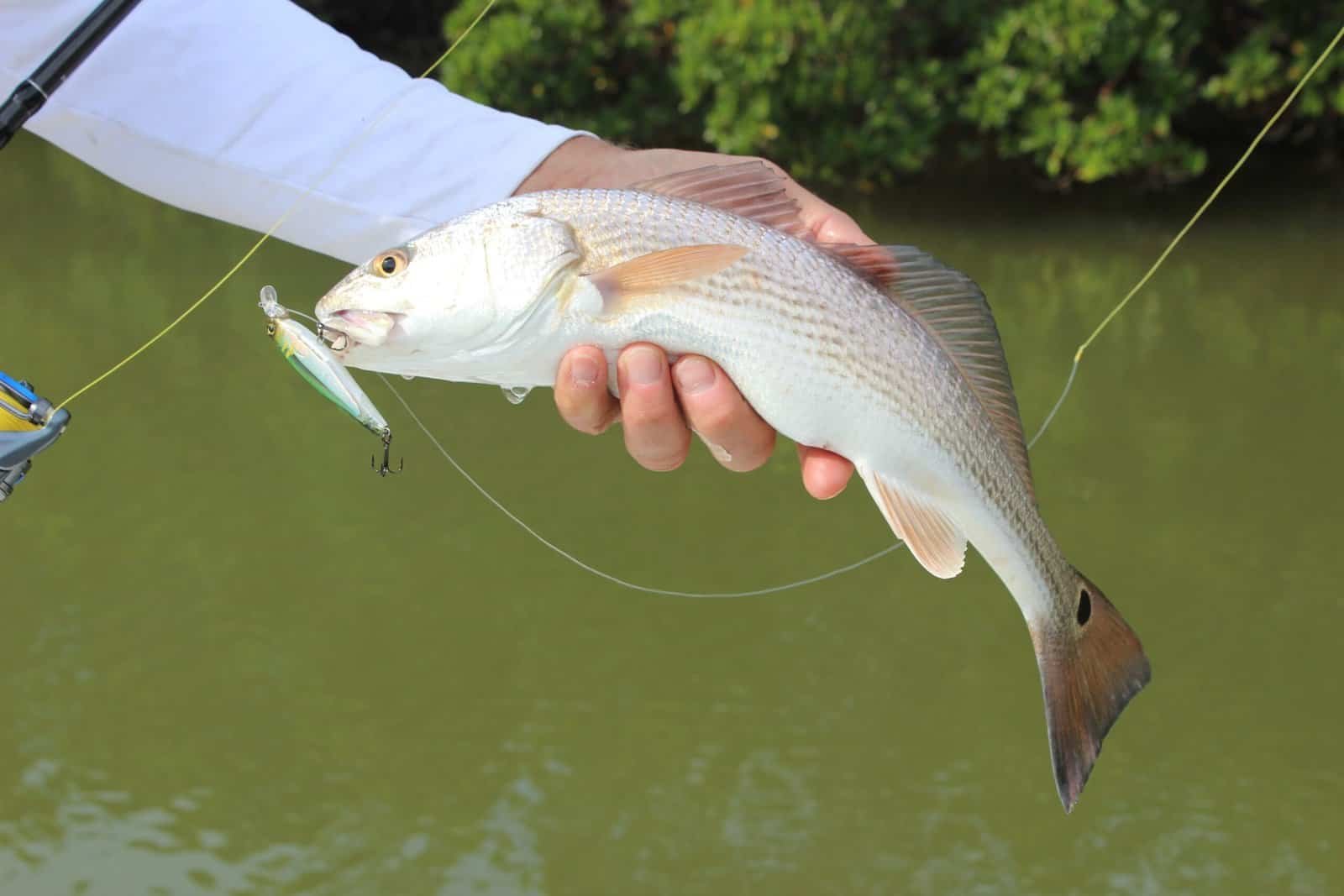
Best Redfish Lures
Discover the most productive artificial lures for Florida redfish and learn how habitat, forage, current, and water conditions influence lure selection.
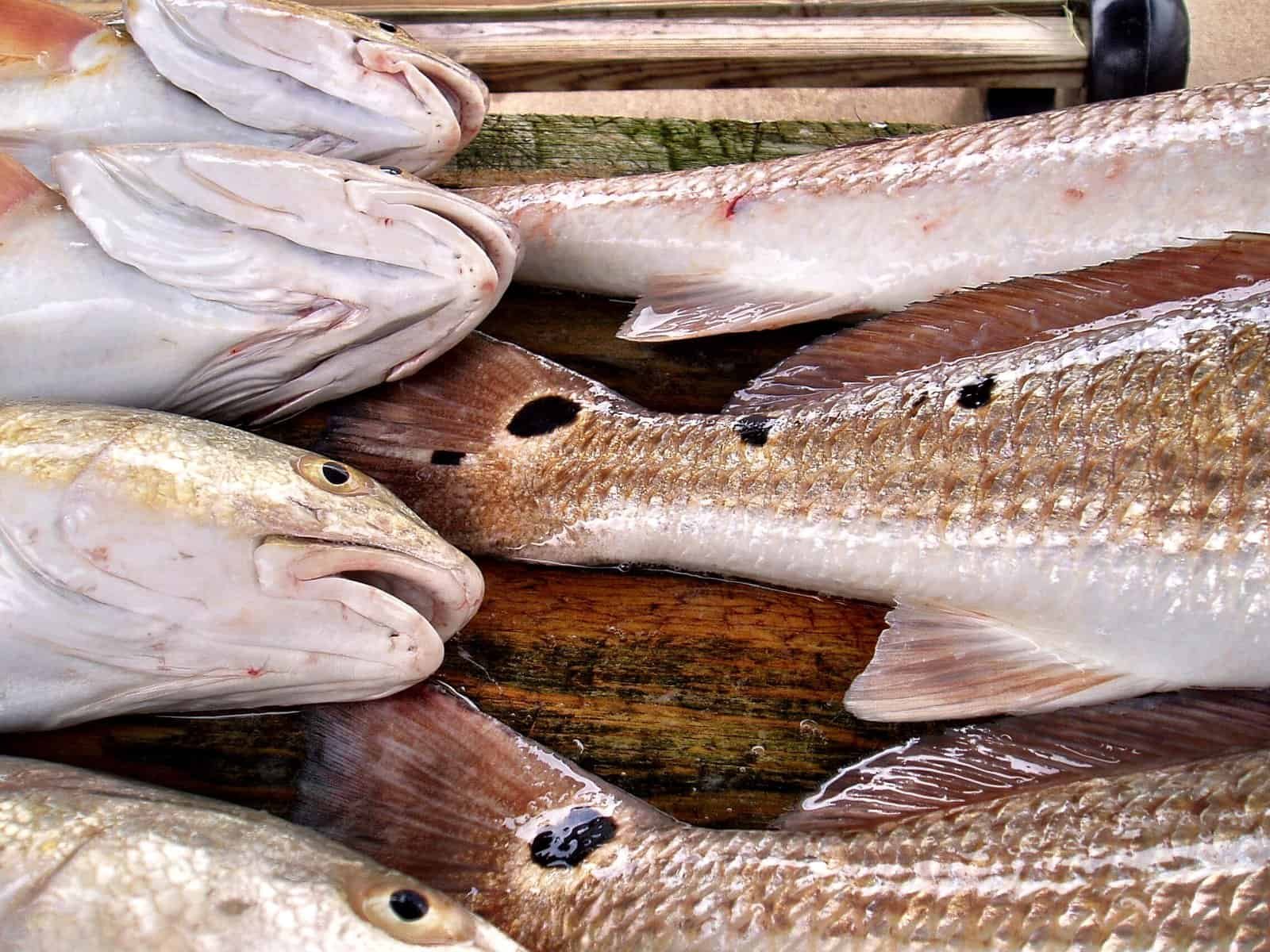
Topwater Redfish
Learn when to throw topwater lures for Florida redfish, how to choose colors, and how to create an effective walk-the-dog presentation.
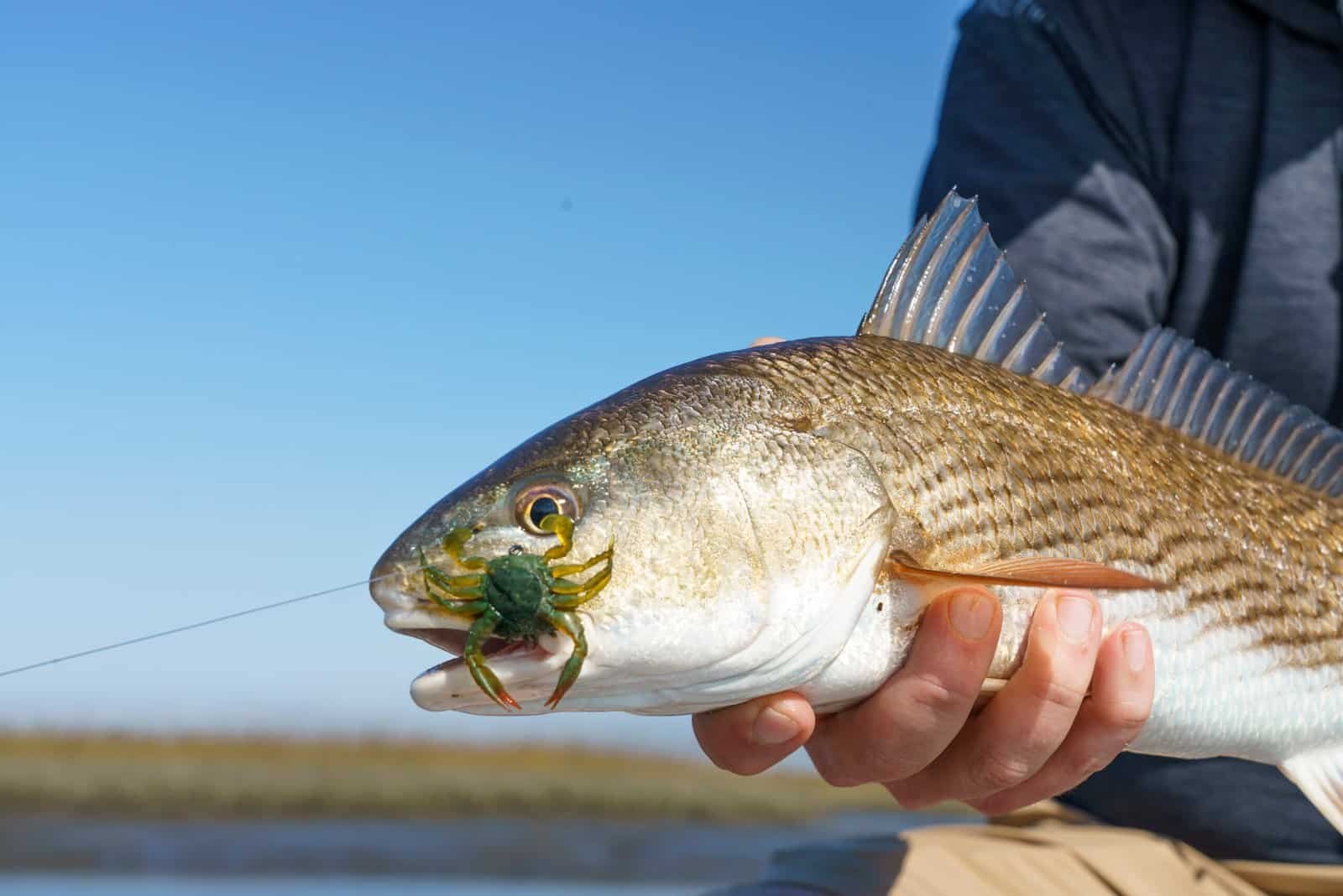
Florida Redfish Fishing
Explore our complete Florida Redfish Fishing Guide covering habitat, behavior, tides, artificial lures, seasonal patterns, and fishing techniques.
Fishing Grass Flats
Learn how to locate redfish using potholes, grass edges, bait movement, tides, and other features across Florida's shallow grass flats.