Don't miss our holiday offer - 20% OFF!

Fishing Grass Flats for Redfish in Florida
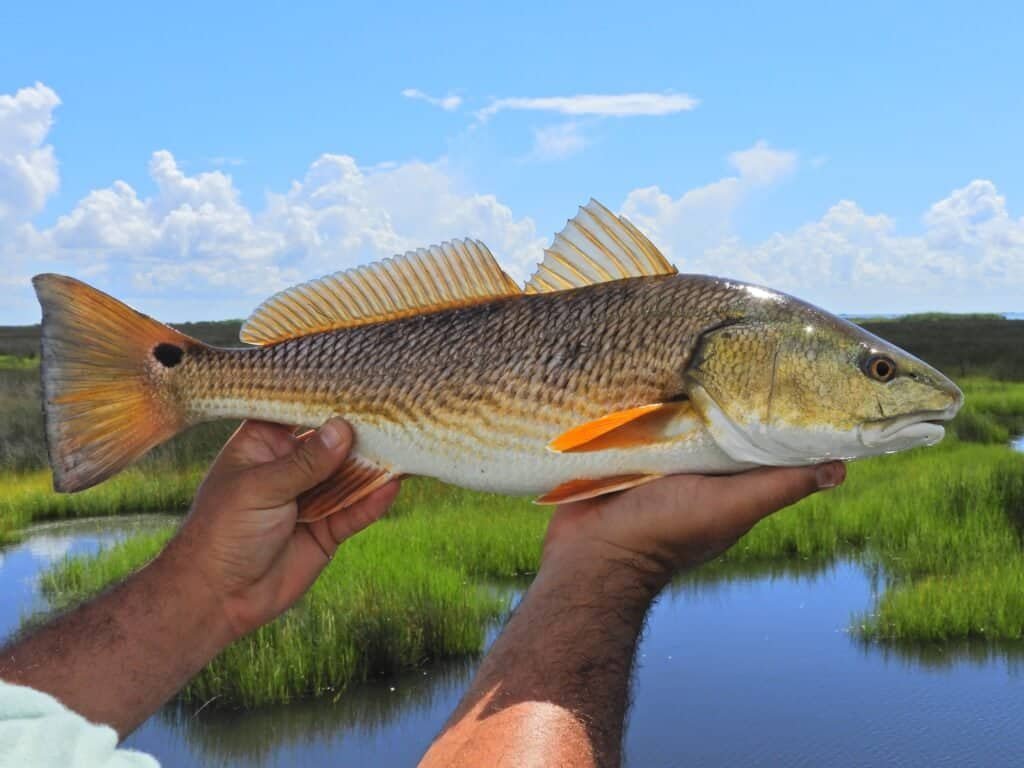
Florida’s grass flats provide some of the most exciting redfish fishing in the state. Miles of shallow seagrass create an enormous feeding environment filled with shrimp, crabs, mullet, pinfish, and other forage redfish depend upon throughout the year.
But a large grass flat can also be intimidating.
At first glance, hundreds of acres of submerged grass may look exactly the same. Casting randomly across the flat might eventually produce a fish, but consistently catching redfish requires learning to recognize the subtle features that concentrate them.
A sandy pothole, small depth change, isolated oyster patch, deeper channel, school of mullet, or slightly different grass edge can turn an otherwise ordinary section of a flat into a redfish feeding area.
The key to fishing Florida grass flats isn’t covering every acre.
It’s learning which parts of the flat deserve your casts.
Fishing Grass Flats for Redfish in Florida
Florida’s grass flats provide some of the most exciting redfish fishing in the state. Miles of shallow seagrass create an enormous feeding environment filled with shrimp, crabs, mullet, pinfish, and other forage redfish depend upon throughout the year.
But a large grass flat can also be intimidating.
At first glance, hundreds of acres of submerged grass may look exactly the same. Casting randomly across the flat might eventually produce a fish, but consistently catching redfish requires learning to recognize the subtle features that concentrate them.
A sandy pothole, small depth change, isolated oyster patch, deeper channel, school of mullet, or slightly different grass edge can turn an otherwise ordinary section of a flat into a redfish feeding area.
The key to fishing Florida grass flats isn’t covering every acre.
It’s learning which parts of the flat deserve your casts.
Why Redfish Love Grass Flats
Healthy seagrass supports an entire food chain.
Shrimp and crabs hide within the vegetation. Pinfish and juvenile baitfish use the grass for protection. Mullet travel across flats feeding and disturbing the bottom, sometimes exposing additional forage in the process.
Redfish take advantage of all of it.
Grass flats also provide redfish with access to shallow water where larger predators may be less comfortable. During favorable tides, reds can spread across surprisingly skinny water in search of food.
Common redfish forage on grass flats includes:
- Shrimp
- Small crabs
- Finger mullet
- Pinfish
- Mud minnows
- Small baitfish
- Marine worms and other bottom-dwelling organisms
Where that forage concentrates, redfish often follow.
How to Read a Grass Flat
One of the biggest mistakes anglers make is treating an entire grass flat as one piece of habitat.
It isn’t.
Think of a grass flat as an underwater landscape containing highways, feeding stations, edges, depressions, and escape routes.
Learning to recognize those features dramatically reduces the amount of unproductive water you need to fish.
Sandy Potholes
Potholes are patches of exposed sand surrounded by submerged grass.
They’re among the most obvious—and productive—features on many Florida flats.
Baitfish crossing open sand lose the protection provided by vegetation, while shrimp and crabs moving between grass beds become easier for predators to detect.
Redfish often patrol the edges of potholes rather than sitting directly in the center.
Cast beyond the pothole and bring your lure across the transition from grass to sand.
Pay particular attention as the lure enters or leaves the open area.
That’s frequently where the strike occurs.
Grass Edges
Anywhere submerged grass meets open sand, deeper water, an oyster bed, or another type of bottom structure, you’ve found an edge.
Edges give redfish a natural travel route.
Instead of wandering randomly across an enormous flat, fish can follow these transitions while searching for food.
Long, irregular edges are often better than perfectly straight ones because points, pockets, and cuts create natural ambush opportunities.
Fishing Tip: Cast parallel to a productive grass edge rather than constantly casting across it. Your lure remains in the strike zone much longer.
Channels and Troughs
Even a small depth difference can be significant in shallow water.
Channels and troughs allow redfish to move between deeper water and feeding flats as tides rise and fall.
During a rising tide, fish may travel through these depressions before spreading across the flat.
During falling water, the same routes can become escape corridors as fish retreat toward deeper areas.
If you’re fishing a large flat and can’t locate fish across the top, find the nearest channel or trough.
Points and Irregularities
Points create natural intersections between structure and moving water.
A grass point extending into deeper water may concentrate bait along its edges, particularly when tidal current flows across it.
Small points can be easy to overlook, but they often produce repeatedly because the surrounding current and structure remain consistent.
The same principle applies to:
- Grass islands
- Small pockets
- Cuts
- Depressions
- Isolated patches of vegetation
Anything different deserves attention.
Oyster Patches
An isolated oyster patch surrounded by grass can be an especially valuable target.
Oysters support crabs, shrimp, and small baitfish while also creating a hard-bottom structure unlike the surrounding vegetation.
Redfish may patrol these areas specifically looking for crustaceans.
Fish the edges carefully and check your leader frequently. Oyster shell can damage fishing line quickly.
Find the Bait, Find the Redfish
Structure matters, but food matters more.
One of the best ways to eliminate unproductive grass-flat water is to look for signs of life.
Mullet
Schools of mullet are especially valuable.
Redfish frequently travel near mullet because feeding mullet disturb the bottom, potentially exposing shrimp, crabs, and other small organisms.
You don’t necessarily need to cast directly into the mullet school.
Fish the edges and behind the school.
A redfish may be following along looking for whatever the mullet disturb.
Nervous Bait
Small baitfish suddenly scattering across the surface deserve attention.
Something caused that reaction.
It could be redfish, trout, snook, or another predator—but it’s worth investigating.
Birds
Birds can help reveal concentrations of bait.
Diving birds indicate active baitfish, while wading birds working a particular shoreline or shallow area may reveal where shrimp, crabs, and small forage are concentrated.
Learn to use everything happening around the flat as information.
Recognizing Redfish on a Grass Flat
Sometimes you won’t have to guess where the fish are.
Shallow-water redfish frequently reveal themselves.
Tails
A redfish tail breaking the surface usually indicates a fish feeding along the bottom.
These are some of the most exciting fish to target.
Don’t cast at the tail.
Determine which direction the fish is facing and place the lure ahead of it.
Wakes and Pushes
A moving redfish can create a V-shaped wake or subtle bulge in shallow water.
Larger schools may push enough water to be visible from considerable distances.
Watch the direction of travel and position your lure ahead of the fish.
Mud Clouds
Redfish rooting along the bottom can disturb sediment and create cloudy patches of water.
A fresh mud cloud can reveal a fish you never actually saw.
Look at the direction the cloud is moving and search the leading edge.
Nervous Water
Sometimes you won’t see a defined wake.
Instead, the surface simply looks different—small ripples, bait scattering, or an area of water that appears unusually disturbed.
Experienced sight fishermen learn to investigate anything that doesn’t look normal.
Best Tides for Grass-Flat Redfish
There’s no single perfect tide for every Florida grass flat because depth, geography, and tidal range vary considerably.
The important concept is understanding how changing water levels move redfish across the flat.
Incoming Tide
A rising tide gives redfish access to increasingly shallow feeding areas.
Fish may move from:
Channels → deeper grass edges → main flat → shallow shoreline
Shrimp, crabs, and baitfish move with the rising water.
Instead of waiting in one location, consider gradually following the fish shallower.
High Tide
High water can spread redfish across a much larger area.
Mangrove shorelines, flooded grass, and extremely shallow portions of the flat may suddenly become accessible.
This can make fish harder to locate because they have more water available.
Look for concentrated bait and structural features rather than randomly covering the entire flat.
Outgoing Tide
As the water falls, the process reverses.
Redfish retreat from the shallowest portions of the flat toward:
- Potholes
- Channels
- Troughs
- Creek mouths
- Deeper grass edges
This can actually make fish easier to locate because available habitat begins shrinking.
Low Tide
Low tide can reveal the entire structure of a grass flat.
Even if you’re not fishing, studying a flat during low water can teach you where channels, depressions, oyster patches, and potholes are located.
Those features become valuable information when the water returns.
Fishing Tip: A tide chart tells you water level. The flat tells you what that water level actually means.
Best Artificial Lures for Grass-Flat Redfish
The best grass-flat lures combine natural presentation with the ability to fish through or above submerged vegetation.
Paddle Tail Swimbaits
Paddle tails are excellent search baits.
They allow anglers to cover water while producing vibration that redfish can detect even when visibility isn’t perfect.
Rig them lightly enough to remain above the grass.
A steady retrieve with occasional pauses is often all that’s required.
Weedless Gold Spoons
Gold spoons have been catching Florida redfish for generations.
They’re especially effective across large flats because they cast well, create flash and vibration, and can be worked through vegetation with relatively few snags.
They’re an excellent choice when you’re trying to locate scattered fish.
Soft Plastic Shrimp
When redfish aren’t aggressively chasing baitfish, a shrimp imitation allows you to slow down.
Work shrimp around potholes, grass edges, and areas where fish are visibly feeding near the bottom.
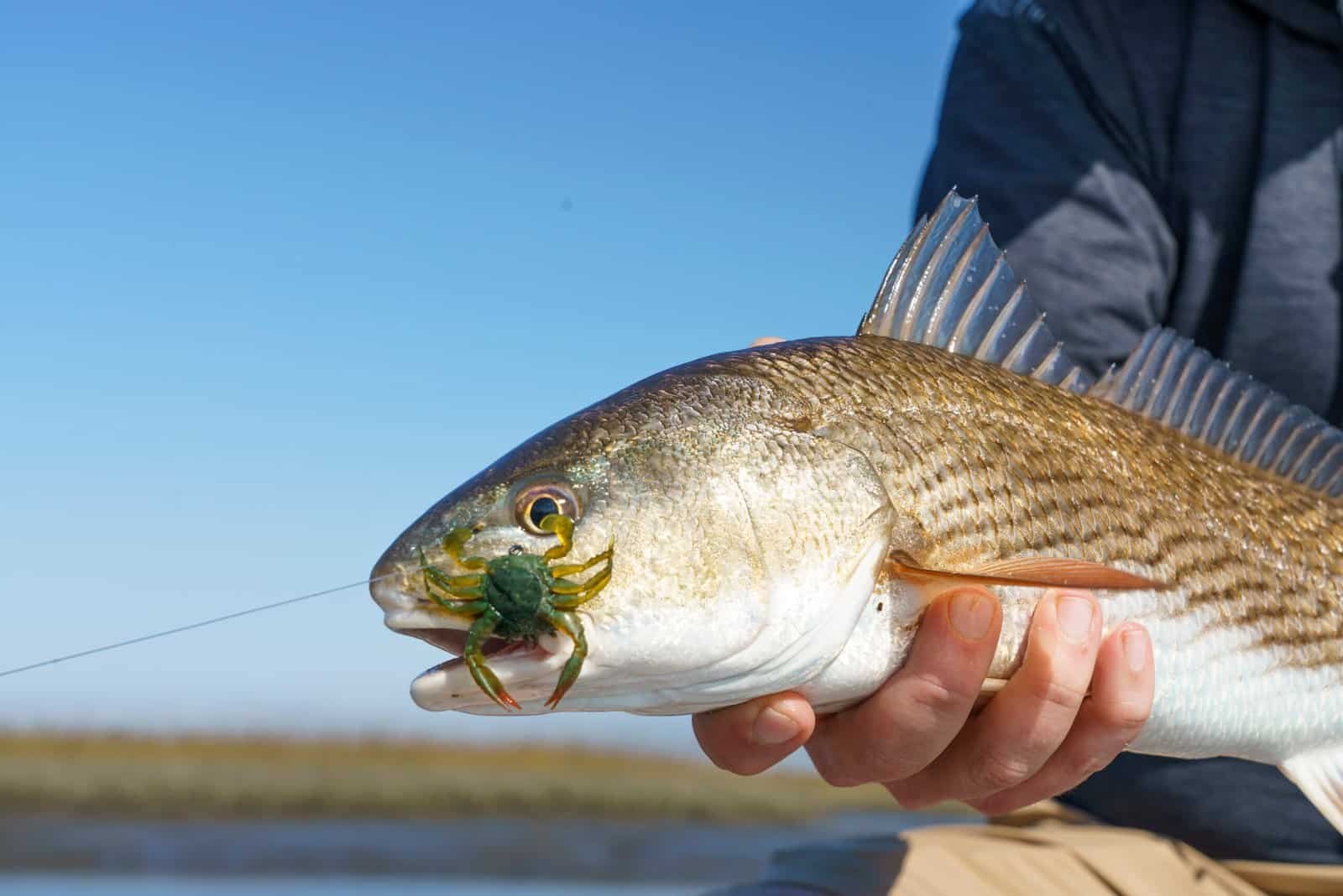
Soft Plastic Crabs
Crab imitations are excellent for tailing redfish.
Place the lure ahead of the fish and use very little movement.
A crab sitting in the right place can be more convincing than one constantly hopping away.
Jerk Shads
Weedless jerk shads excel in shallow grass.
Their erratic action resembles an injured baitfish, while weightless or lightly weighted rigging allows them to remain above vegetation.
Topwater Lures
During early morning, evening, overcast conditions, and active bait periods, topwater walking baits can produce explosive strikes.
They’re also excellent search tools because the surface disturbance can attract fish from a greater distance.
Choosing the Right Lure Weight
Grass-flat fishing is one situation where lighter is often better.
A jig head that’s too heavy immediately sinks into vegetation, collects grass, and spends very little time where redfish can see it.
Use the lightest presentation that still gives you adequate casting distance and lure control.
The goal is often to keep the lure:
Above the grass—not buried inside it.
When fishing extremely shallow vegetation, weedless or weightless presentations may be the better choice.
As water depth or current increases, gradually add weight.
Sight Fishing Grass Flats
Sight fishing is one of the most rewarding ways to catch Florida redfish.
Instead of searching with repeated casts, you locate the fish first and then choose the presentation.
Stealth becomes critical.
Reduce unnecessary boat movement and noise. Keep voices low, avoid dropping equipment, and use a trolling motor, push pole, or paddle carefully when appropriate.
Once you locate a fish, don’t rush the cast.
Determine:
- Which direction it’s traveling
- Whether it’s actively feeding
- How fast it’s moving
- Where your lure needs to land
- How much movement the lure requires
A well-positioned lure may need almost no action.
Blind Casting Grass Flats
Sight fishing isn’t always possible.
Cloud cover, wind, stained water, or slightly greater depth can make redfish difficult to see.
That’s when strategic blind casting becomes important.
Strategic is the key word.
Don’t simply fan-cast across identical water.
Aim at:
- Potholes
- Grass edges
- Points
- Oyster patches
- Channels
- Mullet schools
- Visible bait activity
Paddle tails, spoons, jerk shads, and topwaters are particularly useful because they allow you to cover water efficiently.
If you catch one redfish, slow down.
There may be others nearby.
Wind and Grass-Flat Redfish
Wind can dramatically change a grass flat.
A moderate wind may push bait toward a shoreline, create additional water movement, and reduce the ability of redfish to detect anglers.
Too much wind can muddy shallow water and make sight fishing difficult.
Consider both sides of the flat.
A windblown shoreline may hold concentrated bait and feeding fish, while a protected shoreline may offer cleaner water and better visibility.
Wind can also influence actual water depth. Sustained wind may push water onto or away from shallow areas, making conditions different from the predicted tide.
Use the tide chart as a starting point—not the entire answer.
Boat Positioning and Stealth
Poor boat positioning can ruin a productive flat before the first cast.
Whenever possible, approach fish from a distance and let wind or current help move you into casting range.
Avoid running the outboard across water you intend to fish.
Plan your drift using:
- Wind Direction – Use the wind to help create a controlled drift across the flat rather than constantly relying on the trolling motor.
- Tidal Current – Position the boat so the current naturally carries you toward productive water while keeping you within casting range.
- Sun Position – Keep the sun behind you when possible to reduce glare and make redfish, wakes, shadows, and bottom features easier to see.
- Fish Movement – Watch which direction redfish are traveling and position the boat ahead of them instead of following or chasing the fish.
- Structure – Plan your drift around grass edges, potholes, channels, oyster patches, and other features where redfish are likely to feed or travel.
The goal is to intercept redfish rather than chase them.
When sight fishing, positioning the sun behind you can also improve visibility and make subtle wakes, shadows, and fish easier to detect.
Seasonal Grass-Flat Redfish Patterns
Spring
Warming water brings increasing activity across the flats.
Shrimp and baitfish become more active, and redfish begin spending more time in shallow feeding areas.
Paddle tails, shrimp, and jerk shads are excellent choices.
Summer
Fish early.
Redfish may feed across shallow flats around sunrise before moving toward deeper edges, mangroves, or stronger current as temperatures rise.
Topwater lures can be particularly effective during the morning.
Fall
Fall can produce outstanding grass-flat fishing as mullet and other baitfish become increasingly active.
Look for bait schools and aggressive feeding.
Paddle tails, spoons, jerk shads, and topwaters allow you to capitalize on active fish.
Winter
Cold fronts can push redfish away from extremely shallow water.
Concentrate on deeper potholes, channels, troughs, and protected flats.
Sunny afternoons can become productive when shallow water warms several degrees and fish move back onto the flat.
Common Grass-Flat Redfish Mistakes
Fishing Featureless Water
A huge grass flat isn’t automatically a productive grass flat.
Look for something different.
Edges, potholes, channels, bait, oysters, and depth changes concentrate fish.
Using Too Much Weight
Constantly pulling grass from your lure is a clue.
Lighten the presentation or switch to a weedless rig.
Ignoring the Tide
The fish you caught in twelve inches of water yesterday may not be there today if the tide is two feet lower.
Fish the conditions, not yesterday’s waypoint.
Chasing Visible Fish
Repeatedly following a school with a trolling motor usually pushes the fish farther away.
Predict where they’re going and position yourself ahead of them.
Casting Too Close to Tailing Fish
Your lure doesn’t need to land six inches from the fish’s head.
Give the redfish room to find the bait naturally.
Ignoring Mullet
Mullet aren’t just background activity.
They can reveal productive sections of a flat and sometimes lead you directly to feeding redfish.
Putting the Grass-Flat Puzzle Together
Successful grass-flat fishing isn’t about finding one secret spot.
It’s about recognizing a combination of clues.
You might find a grass point bordering a sandy pothole. Mullet are moving across it. The tide is rising. Shrimp are flicking near the surface. Then you notice a subtle wake moving along the edge.
None of those clues means much by itself.
Together, they tell a story.
That’s the real skill behind fishing grass flats for redfish.
Learn to read the bottom, watch the bait, understand the tide, and recognize how redfish use the available habitat. Once you do, an enormous grass flat stops looking like hundreds of acres of identical water.
It becomes a map of likely redfish locations.
Grass Flat Redfish FAQ
What is the best tide for catching redfish on grass flats?
Both incoming and outgoing tides can be productive. Rising water allows redfish to move onto shallower portions of the flat, while falling water often concentrates them around potholes, channels, and deeper grass edges.
What is the best lure for grass-flat redfish?
Paddle tail swimbaits and weedless spoons are excellent search baits. Shrimp and crab imitations work well when redfish are feeding near the bottom, while topwater lures can be highly effective during low-light periods.
Why are redfish around mullet schools?
Feeding mullet disturb the bottom as they move across shallow flats, which can expose shrimp, crabs, and other forage. Redfish may follow nearby to take advantage of those feeding opportunities.
What are potholes on a grass flat?
Potholes are areas of exposed sand surrounded by seagrass. Their edges create natural feeding zones where baitfish and crustaceans moving between grass beds become vulnerable to predators.
How shallow will redfish go?
Redfish regularly feed in extremely shallow water when depth, temperature, and tides allow it. Their backs and tails may occasionally break the surface while feeding.
Should I use a heavy jig head on grass flats?
Usually not. Use enough weight to control the lure while keeping it above the vegetation. Excessive weight causes soft plastics to bury in grass and reduces the effectiveness of the presentation.
Related Redfish Guides
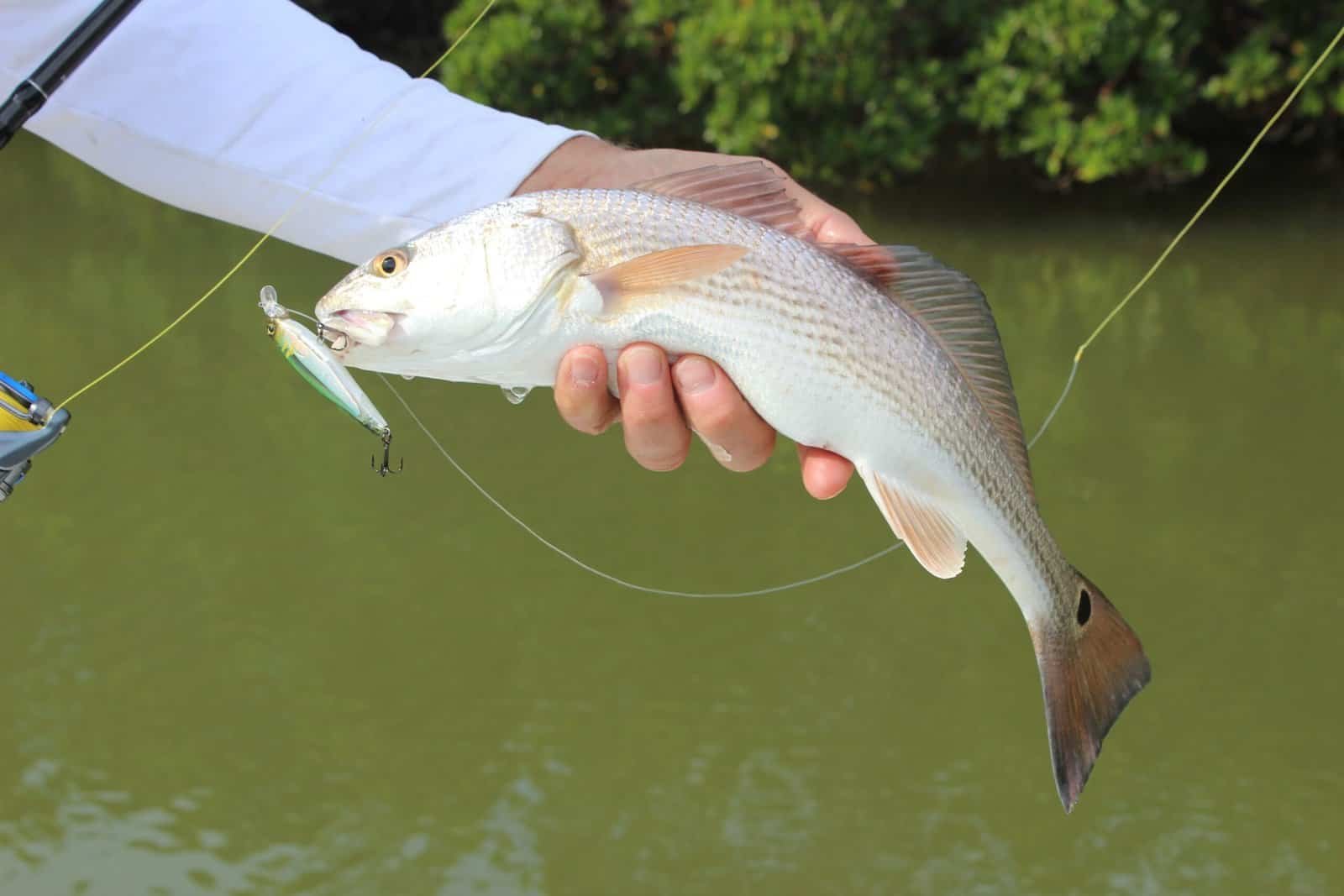
Best Redfish Lures
Discover which artificial lures work best for Florida redfish and how to choose the right presentation for habitat, tide, and conditions.
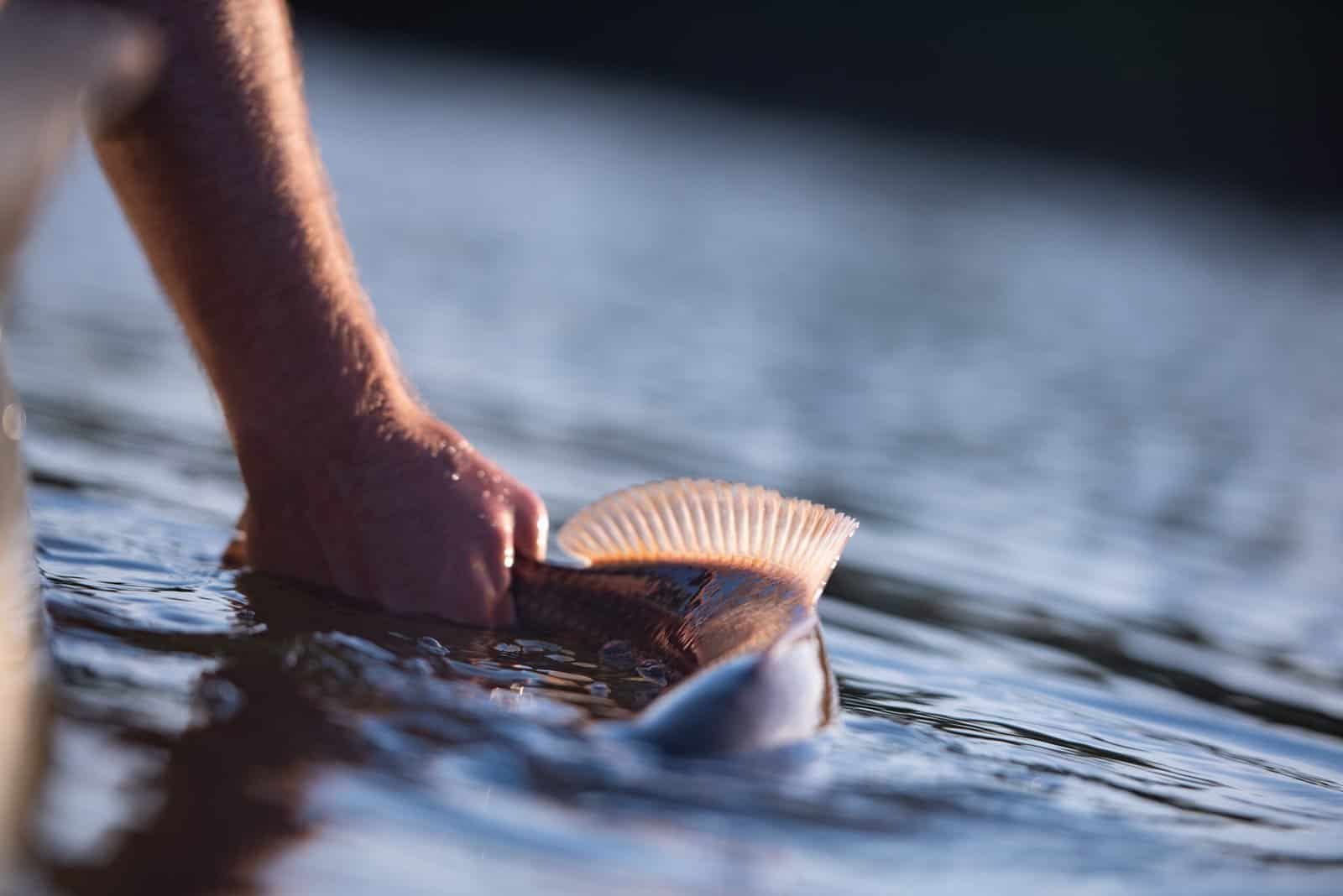
Fishing Oyster Bars
Learn how redfish use oyster bars, current seams, and tidal movement to locate shrimp, crabs, and other forage.
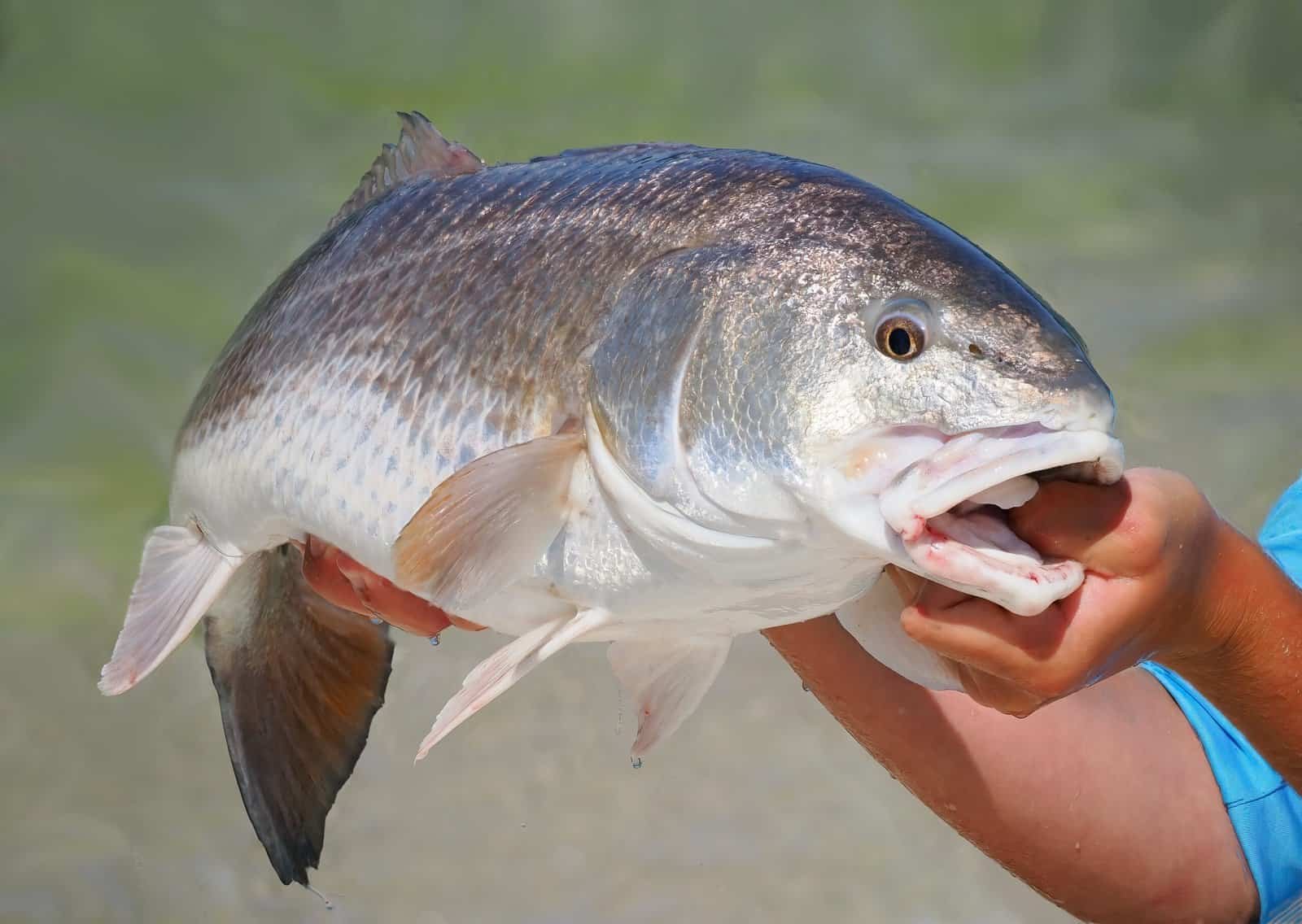
Redfish Seasons
See how Florida redfish locations and feeding patterns change throughout spring, summer, fall, and winter.
Florida Redfish Fishing
Explore our complete guide to Florida redfish habitat, behavior, tides, artificial lures, techniques, seasons, and regional fisheries.