Don't miss our holiday offer - 20% OFF!

Fishing Oyster Bars for Redfish in Florida
Oyster bars are among the most productive redfish habitats in Florida’s inshore waters. They provide structure, support an abundant food supply, and alter tidal current—all three of which create ideal feeding opportunities for redfish.
But successful oyster-bar fishing involves more than finding exposed shells and casting toward them.
The most productive part of an oyster bar may actually be underwater. Submerged points, cuts, depressions, current seams, and transitions between shell, sand, mud, and grass can all concentrate feeding fish.
Tide also changes the entire environment. An oyster bar barely visible at high tide may become a large exposed structure several hours later, while redfish reposition around it as water depth and current change.
Learning to fish oyster bars means learning to read structure, current, tide, and forage together.
Once you understand those relationships, an oyster bar becomes much more than a pile of shell.
It becomes a map showing where redfish are likely to feed.
Why Redfish Love Oyster Bars
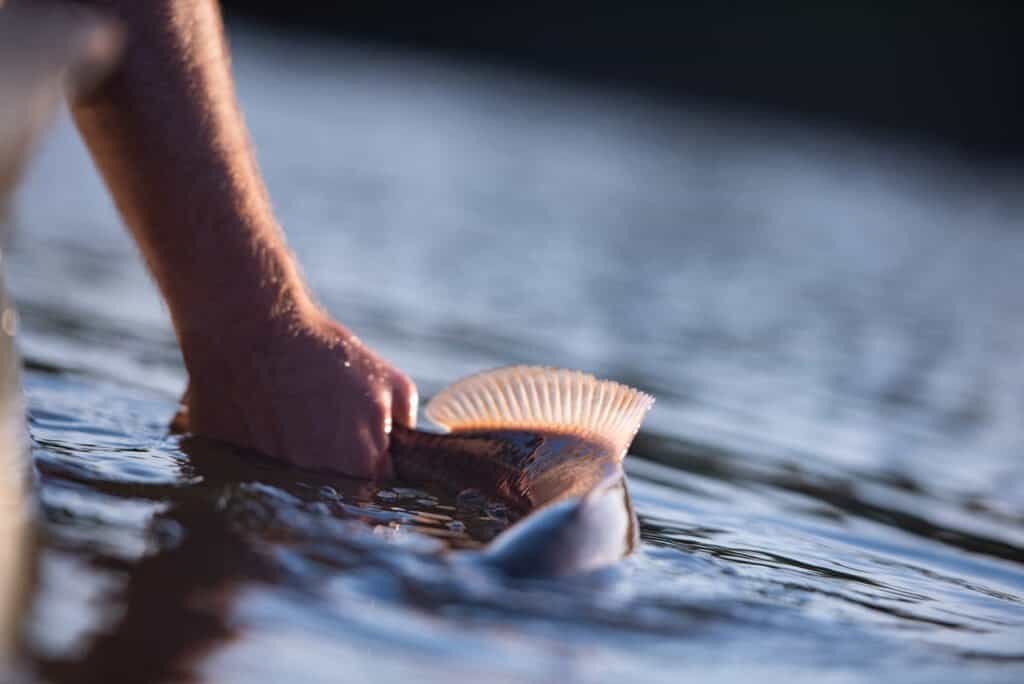
Oyster bars provide redfish with two things they’re constantly searching for: food and efficient feeding opportunities.
Healthy oyster habitat supports an assortment of marine life, including:
- Small crabs
- Shrimp
- Mud minnows
- Small baitfish
- Marine worms
- Other crustaceans and invertebrates
Redfish readily feed on many of these organisms.
The physical structure of the oyster bar also changes how water moves through an area. Current flowing around shell creates slower pockets, eddies, seams, and pressure points where prey can become concentrated.
Instead of swimming through open water searching randomly for food, redfish can position near these areas and allow tidal movement to bring feeding opportunities to them.
That’s why a relatively small oyster bar can sometimes hold more fish than a much larger area of seemingly attractive shoreline.
How to Read an Oyster Bar
One of the biggest mistakes anglers make is focusing exclusively on the oysters they can see.
What you see above the water may represent only a portion of the structure.
The submerged shape of the bar—and the way water flows around it—is often much more important.
Oyster Points
Points extending from an oyster bar interrupt moving water.
Current flowing around the point can create a faster flow on one side and slower water behind it. Redfish can position near that transition and intercept shrimp, crabs, and baitfish carried past the structure.
Fish both sides until you determine where the current is creating the better feeding lane.
A seemingly insignificant point can hold fish repeatedly when the tide is right.
Cuts and Gaps
Look for openings between oyster bars or cuts through larger shell formations.
These narrow areas can accelerate current and funnel food through a smaller space.
Redfish may position near the entrance, exit, or along the slower edge of the flow rather than directly in the strongest current.
Cuts become particularly interesting when they connect shallow feeding areas with deeper water.
Think of them as underwater highways.
Submerged Oyster Edges
The visible edge of an oyster bar isn’t necessarily its actual edge.
Shell may continue underwater for several feet—or much farther.
Redfish frequently patrol these submerged edges looking for crabs and shrimp while remaining in enough water to move comfortably.
Cast beyond the suspected edge and work your lure across the transition.
Pay attention to where you feel shell contact. That can help you mentally map the underwater structure.
Drop-Offs and Depressions
A depth change adjacent to an oyster bar can be especially productive.
During falling water, redfish may leave the shallowest shell and settle along a deeper edge, trough, or depression.
These areas provide immediate access to both feeding structure and deeper water.
Even a relatively small change in depth matters when the surrounding water is shallow.
Sand, Mud, Grass, and Shell Transitions
Whenever two types of bottom meet, investigate the transition.
Look for areas where oysters meet:
- Sand
- Mud
- Seagrass
- Creek channels
- Mangrove shorelines
These transitions create habitat diversity and often support several types of forage in a relatively small area.
A patch of oysters surrounded by grass, for example, combines crustacean habitat with nearby baitfish cover.
That’s an excellent place for a redfish to feed.
Current: The Key to Oyster-Bar Redfish
If there’s one concept to understand about oyster-bar fishing, it’s current.
Oysters create structure. Current makes that structure come alive.
As tidal water flows around a bar, it creates areas of fast and slow water. Redfish frequently hold near the boundary between the two.
These boundaries are called current seams.
A fish positioned in slower water can conserve energy while watching food move past in the faster current.
Look for:
- Visible ripples
- Small eddies
- Foam lines
- Debris moving along a consistent path
- Water curling behind a point
- Baitfish gathering near an edge
Those surface clues can reveal what’s happening beneath the water.
Fish the Seam, Not Just the Shell
It’s tempting to throw every cast directly toward the oyster bar.
Sometimes that’s correct.
But if the strongest feeding lane is ten feet away from the visible shell, repeatedly casting at the oysters means you’re missing the fish.
Follow the current.
Incoming Tide and Oyster Bars
An incoming tide gradually increases the amount of water covering an oyster bar and its surrounding structure.
As water rises, redfish may move from deeper edges toward increasingly shallow portions of the bar.
Newly flooded shell provides access to crabs, shrimp, and other forage that may have been inaccessible during low water.
Look for fish moving toward:
- Submerged oyster tops
- Shallow shell edges
- Nearby grass
- Mangrove shorelines
- Flooded marsh edges
The rising water effectively expands the feeding area.
Fishing Strategy
Start deeper during the early incoming tide and gradually move shallower as the water rises.
Rather than waiting for redfish in one spot, follow their access to new feeding water.
Outgoing Tide and Oyster Bars
The outgoing tide can produce some of the best oyster-bar redfish fishing.
As water drains from shallow areas, shrimp, crabs, baitfish, and other forage are pulled toward deeper channels.
Redfish frequently position around oyster points, cuts, creek mouths, and deeper edges where this food becomes concentrated.
Available water is also shrinking.
Instead of having an entire flooded shoreline or flat available, fish are increasingly forced toward predictable travel routes.
Focus On:
- Down-current oyster points
- Creek openings
- Cuts between oyster bars
- Deeper shell edges
- Current seams
- Nearby channels
Fishing Tip: Follow the water as it falls. The productive side of an oyster bar can change dramatically during a single tidal cycle.
High Tide vs. Low Tide
Both stages can teach you something about an oyster bar.
High Tide
High water allows redfish to move across portions of the oyster structure that may be exposed later.
Fish can spread out, making them more difficult to pinpoint.
Concentrate on current, bait activity, and subtle structure rather than relying only on visible shell.
Low Tide
Low water is one of the best times to learn the structure.
Features hidden during high tide suddenly become visible.
Take note of:
- Points
- Cuts
- Channels
- Depressions
- Isolated oyster patches
- Nearby grass edges
- Creek entrances
Even if the fishing isn’t spectacular at dead low water, what you learn can help you fish the same area much more effectively when the tide returns.
Where Redfish Position Around Oyster Bars
Don’t assume redfish always sit directly against the shell. 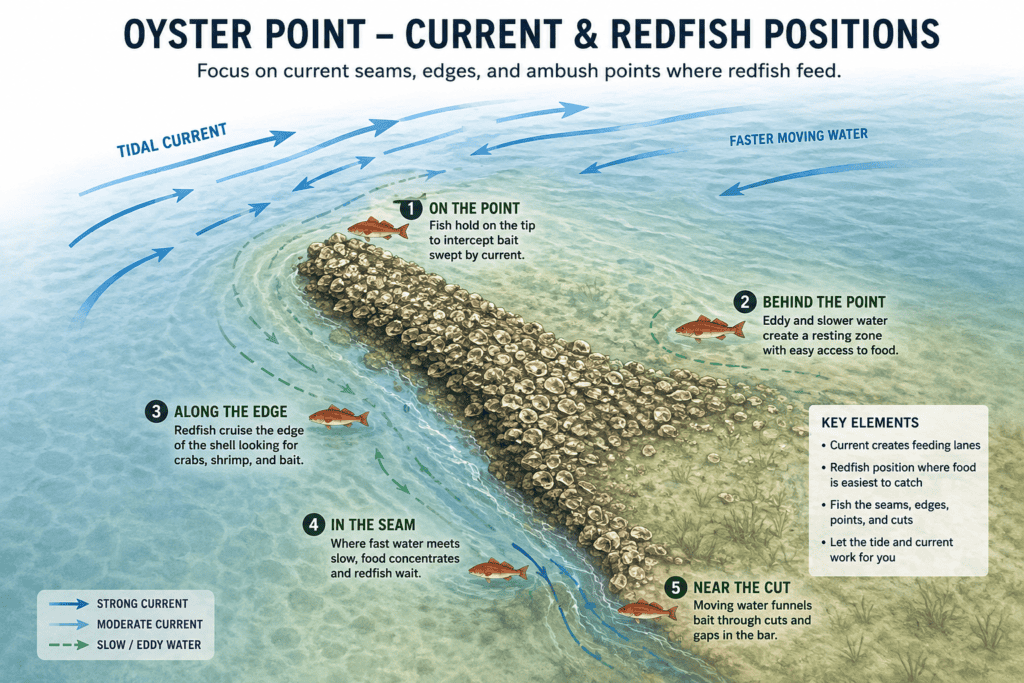
Their position changes with current and water depth.
Up-Current Side
Fish may hold where moving water first encounters the structure, particularly when bait is being pushed toward the bar.
Down-Current Side
The backside of an oyster point can create slower water and an eddy where redfish conserve energy while waiting for food.
Along the Edge
Redfish frequently travel submerged oyster edges looking for shrimp and crabs.
In Cuts
Cuts create concentrated current and natural travel routes.
Nearby Drop-Offs
As water falls, fish may reposition from shallow shell toward nearby deeper water.
The lesson is simple:
Fish the entire structure until the redfish tell you which portion they’re using.
Best Artificial Lures for Oyster-Bar Redfish
Oyster bars support both crustaceans and baitfish, so anglers have several excellent artificial lure options.
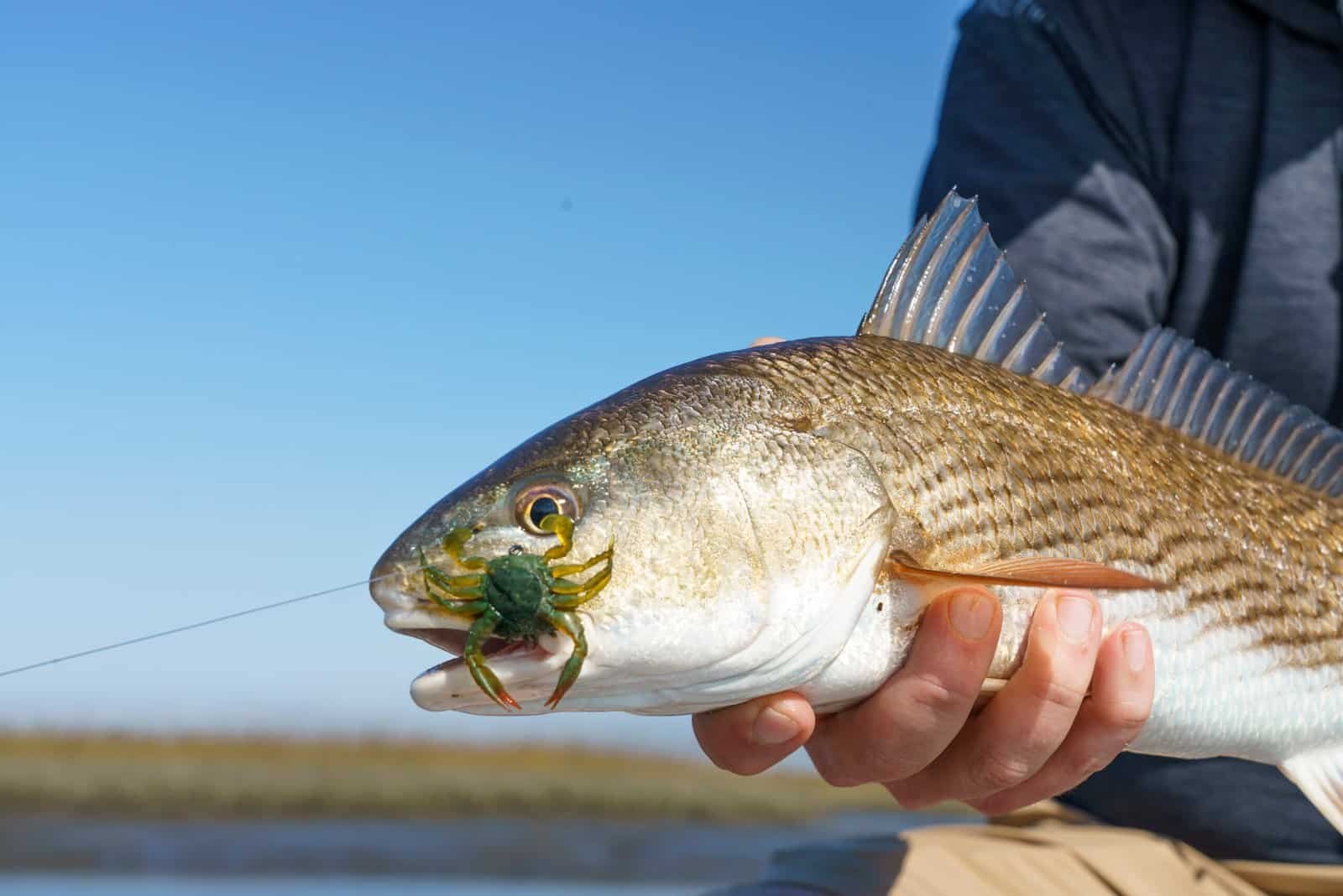
Soft Plastic Crabs
Crab imitations are a natural fit around oyster structure.
Redfish regularly search shell bottom for small crabs, making a slowly worked crab especially effective when fish are feeding near the bottom.
Use short hops or a slow crawl rather than an aggressive retrieve.
When sight fishing, place the lure ahead of the fish and let the redfish find it.
Soft Plastic Shrimp
Shrimp imitations are extremely versatile around oyster bars.
They can be hopped along submerged shell, drifted through current seams, or worked slowly along deeper edges.
One of the most natural presentations is allowing a shrimp to move with the current.
Cast slightly upstream and maintain enough contact to control the lure without making it look unnatural.
Paddle Tail Swimbaits
Paddle tails are excellent when redfish are chasing baitfish or when you need to cover more water.
Work them along:
- Submerged oyster edges
- Current seams
- Nearby grass
- Creek mouths
- Deeper channels
A paddle tail can also help locate fish before switching to a slower shrimp or crab presentation.
Gold Spoons
Gold spoons provide flash and vibration and can be particularly useful around shallow oyster bars and stained water.
Weedless designs can reduce snagging, although no lure is completely oyster-proof.
Spoons are especially useful when redfish are scattered and you need to search a larger area.
Bucktail Jigs
Bucktails become valuable when fishing deeper oyster edges, creek channels, or stronger current.
Use enough weight to maintain contact with the desired depth without constantly burying the jig in the shell.
Short lifts followed by controlled drops can keep the lure near the bottom where redfish are feeding.
Choosing the Right Jig Head Weight
Jig head weight matters enormously around oysters.
Too little weight and your lure may never reach the feeding zone.
Too much weight and you’ll spend the day wedged between oyster shells.
The goal is to use enough weight to maintain control while minimizing unnecessary bottom contact.
Consider five factors:
- Water Depth – Deeper water generally requires additional weight to reach redfish holding near the bottom.
- Current Strength – Faster tidal flow may require more weight to prevent the lure from being swept above the strike zone.
- Casting Angle – Casting upstream and allowing the lure to drift naturally may require less weight than fishing directly across strong current.
- Bottom Structure – Heavy jig heads can wedge into oyster shell, so lighten the presentation whenever conditions allow.
- Retrieve Style – Swimming a lure along the edge requires less bottom contact than hopping it directly across shell.
Don’t choose jig head weight based solely on casting distance.
Choose it based on what the lure needs to do after it reaches the water.
Fishing With the Current
A natural presentation usually moves with the water—not against it.
Shrimp, small crabs, and injured baitfish don’t normally fight strong current for long periods. They’re carried by it.
Position yourself so you can cast slightly upstream or across the current and bring the lure through the feeding zone naturally.
That might mean allowing a shrimp to sweep past an oyster point or letting a paddle tail cross a current seam before retrieving it through slower water.
Watch your line carefully.
A strike may feel like a sharp thump, but it can also feel like the lure simply stopped drifting.
Leader Selection Around Oyster Shells
Oysters are unforgiving.
Their rough, sharp edges can quickly damage fishing line, particularly when a hooked redfish runs across the bar.
Using an abrasion-resistant leader provides additional protection around shell and structure.
Just as important: inspect it frequently.
Run your fingers carefully along the leader after:
- Catching a fish
- Snagging shell
- Dragging across an oyster edge
- Feeling unexpected abrasion
If the leader feels rough or damaged, replace it.
Losing a fish because you didn’t take thirty seconds to retie is avoidable.
Boat Positioning Around Oyster Bars
Good positioning allows you to fish an oyster bar before the fish know you’re there.
Before approaching, determine:
- Wind Direction – Use wind to help create a controlled drift without constantly operating the trolling motor.
- Tidal Current – Position the boat so you can present lures naturally with the flow.
- Sun Position – Good lighting can help reveal submerged oysters, current seams, and cruising fish.
- Water Depth – Don’t drift so shallow that you damage oysters, seagrass, or your boat.
- Casting Angle – Position yourself so casts cross the productive portion of the structure rather than repeatedly landing directly on top of it.
Avoid running an outboard close to shallow bars you intend to fish.
Redfish living in skinny water can be extremely sensitive to noise.
Fishing Oyster Bars From Shore or Kayak
Oyster bars aren’t exclusively boat-fishing territory.
Kayaks provide excellent access to shallow oyster habitat because they allow anglers to quietly approach areas inaccessible to larger boats.
Shore anglers can also target oysters near bridges, causeways, tidal creeks, and accessible shorelines.
The same principles apply:
Current + structure + food + water depth.
Be especially careful when walking around oyster habitat. Shell can be extremely sharp, submerged footing can be unstable, and exposed oyster beds should be treated as sensitive habitat rather than walking platforms.
Seasonal Oyster-Bar Redfish Patterns
Spring
Warming water increases activity around oyster bars as shrimp, crabs, and baitfish become increasingly active.
Redfish may move shallower with rising tides.
Shrimp, paddle tails, and crab imitations are excellent choices.
Summer
Current becomes especially important during hot weather.
Moving tidal water can create more comfortable feeding conditions, while deeper edges may become increasingly productive during the hottest parts of the day.
Focus on early mornings, moving water, and shaded or deeper structure.
Fall
Fall bait activity can make oyster bars exceptionally productive.
Redfish may aggressively chase mullet and other baitfish around points and current seams.
Paddle tails, spoons, and topwater lures can be excellent search tools.
Winter
Cold fronts may move redfish toward deeper edges and channels adjacent to oyster bars.
Slow presentations become increasingly important.
Sunny afternoons can also warm shallow shell and surrounding mud, encouraging fish to move back into shallower areas.
Common Oyster-Bar Fishing Mistakes
Only Fishing Visible Oysters
The most productive structure may be completely underwater.
Learn the shape of the entire bar.
Ignoring Current
A beautiful oyster bar without useful water movement may be less productive than a small patch of shell sitting in the perfect current.
Fish the water, not just the structure.
Using Too Much Weight
A heavy jig head may provide excellent bottom contact—until it’s permanently lodged between two oyster shells.
Use only as much weight as conditions require.
Fishing the Same Side All Day
As the tide changes, so does the productive side of the structure.
Move with the water.
Retrieving Against Strong Current
Artificial lures often look more natural when presented with tidal flow.
Use the current rather than constantly fighting it.
Getting Too Close
There’s rarely a reason to put the boat directly on top of the structure you’re trying to fish.
Stay back and make longer casts whenever conditions allow.
Ignoring Leader Damage
Oyster shell can weaken a leader without breaking it immediately.
Check your line before the next redfish finds the damaged spot for you.
Oyster Bars Are Feeding Stations
The real value of an oyster bar isn’t the shell itself.
It’s what the structure does to the surrounding environment.
Oysters support food. The structure interrupts current. Tides move shrimp, crabs, and baitfish. Points and cuts create feeding lanes. Nearby channels provide deeper water and travel routes.
Put several of those elements together and you’ve found a high-percentage redfish location.
Instead of approaching an oyster bar and asking:
“Where should I cast?”
Start asking:
“Where is this structure making it easiest for a redfish to feed?”
Look at the direction of the current. Find the points, cuts, seams, submerged edges, and nearby depth changes. Then choose a lure that can naturally move through that feeding zone.
Once you begin looking at oyster bars that way, they stop being isolated pieces of structure and become one of the most predictable redfish habitats in Florida.
Oyster-Bar Redfish FAQs
What tide is best for fishing oyster bars for redfish?
Both incoming and outgoing tides can produce redfish. Rising water gives fish access to increasingly shallow oyster habitat, while outgoing water can concentrate forage around points, cuts, creek mouths, and deeper edges.
What is the best lure for redfish around oyster bars?
Soft plastic crabs and shrimp are excellent when fish are feeding on crustaceans. Paddle tails and gold spoons work well for covering water, while bucktail jigs can be effective along deeper edges and stronger current.
Where do redfish sit around oyster bars?
Redfish may hold along submerged edges, behind points, inside current seams, around cuts, or near adjacent drop-offs. Their exact position often changes with tide and current.
Should I fish directly on top of an oyster bar?
Not necessarily. Much of the productive structure may be submerged around the visible bar. Fish the edges, current seams, points, cuts, and nearby depth changes rather than concentrating every cast directly on exposed shell.
Why are oyster bars good for redfish?
Oyster habitat supports shrimp, crabs, baitfish, and other forage while the physical structure alters tidal current. Together, these conditions create efficient feeding opportunities for redfish.
Are oyster bars better on an incoming or outgoing tide?
Neither is universally better. Incoming water can move redfish onto shallow shell, while outgoing water can funnel forage toward deeper edges and creek mouths. Learning how fish reposition during both stages is more valuable than relying on only one tide.
Explore More Redfish Guides Best Redfish Lures
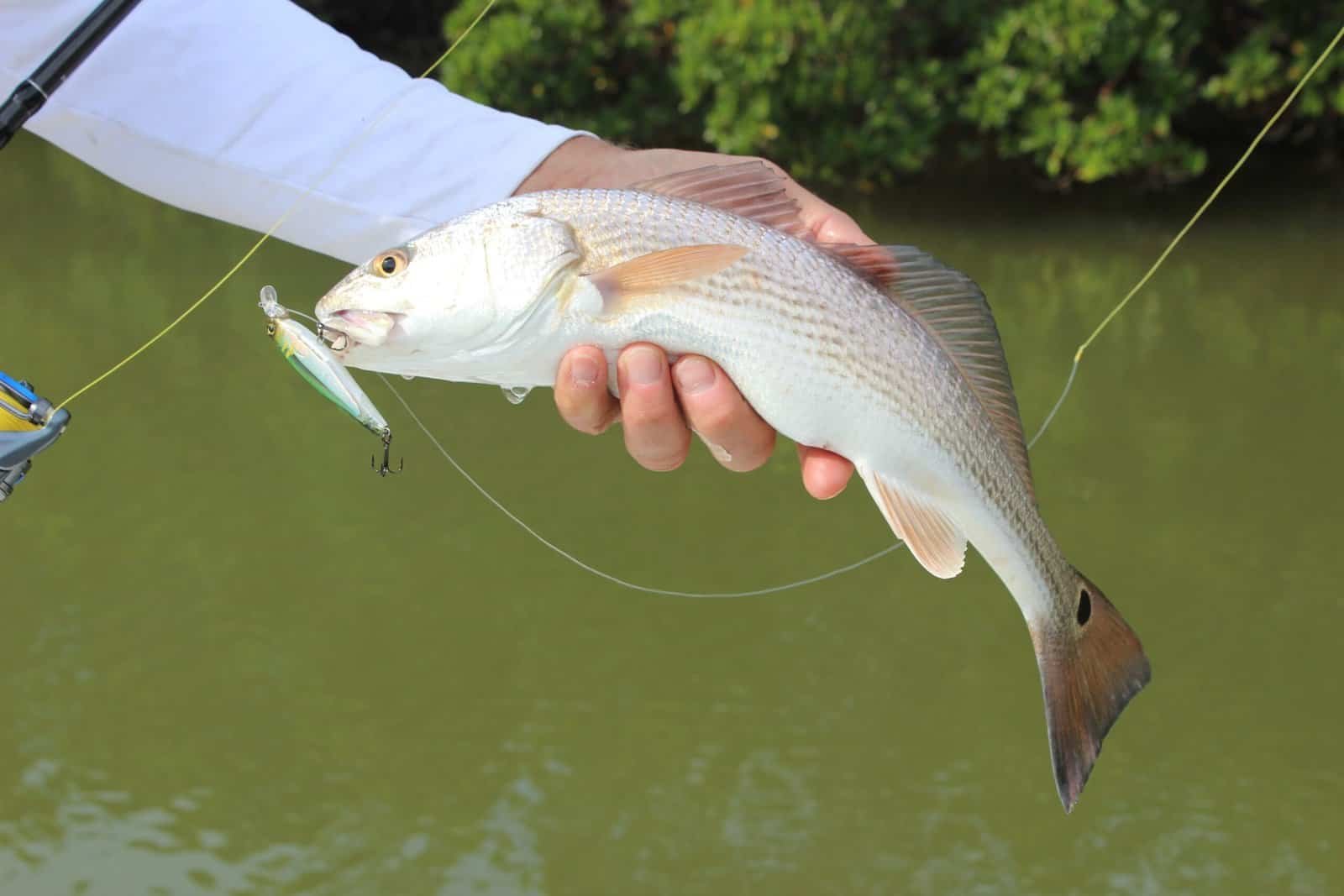
Best Redfish Lures
Discover the most productive artificial lures for Florida redfish and learn how habitat, forage, current, and water conditions influence lure selection.
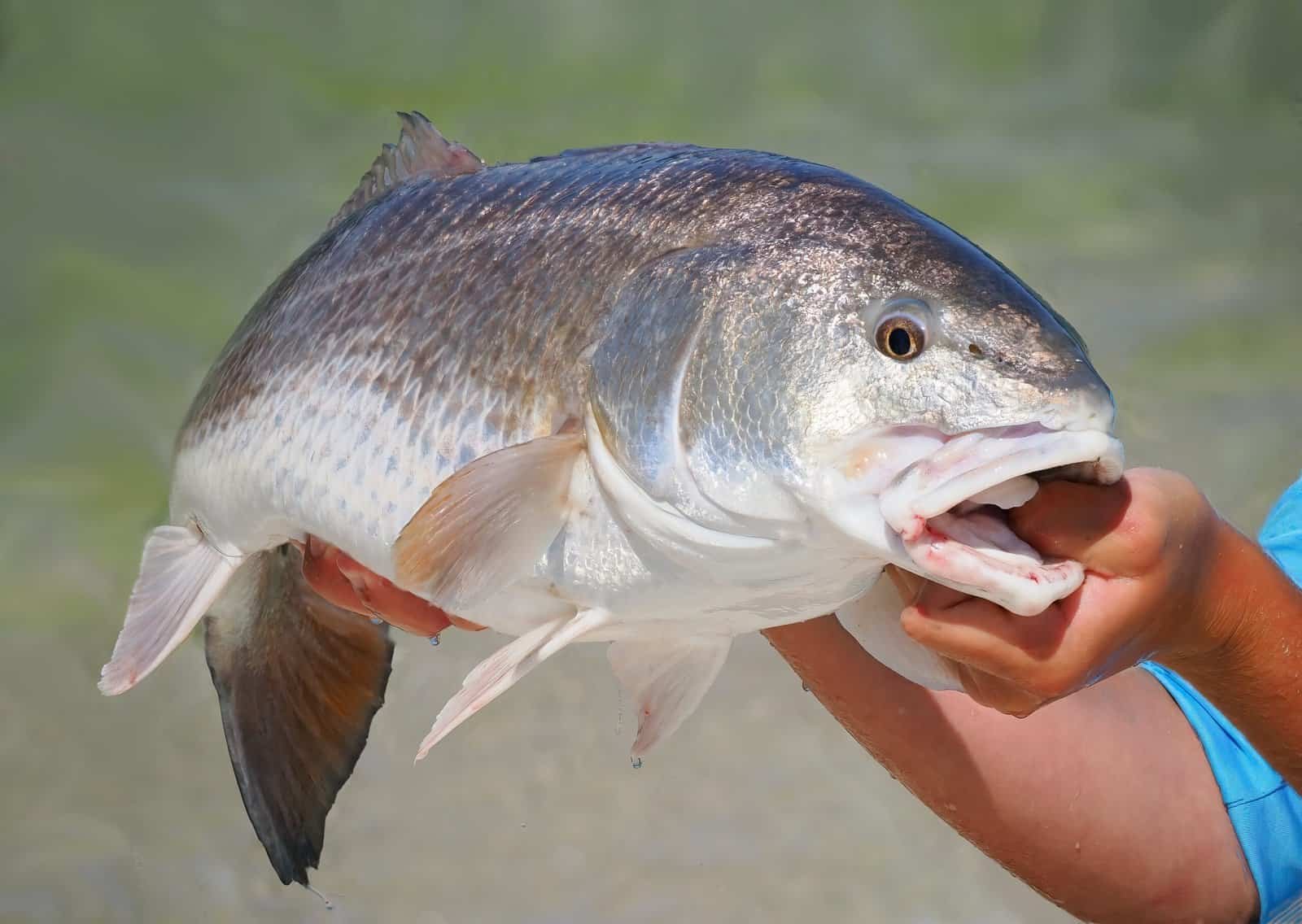
Redfish Seasons
See how redfish behavior, feeding patterns, habitat, and lure selection change throughout Florida's spring, summer, fall, and winter.
Florida Redfish Fishing
Explore our complete Florida Redfish Fishing Guide covering habitat, behavior, tides, artificial lures, seasonal patterns, and fishing techniques.
Fishing Grass Flats
Learn how to locate redfish using potholes, grass edges, bait movement, tides, and other features across Florida's shallow grass flats.