Don't miss our holiday offer - 20% OFF!
Best Sheepshead Baits & Lures for Florida Fishing
Sheepshead have one of the most specialized diets of Florida’s popular inshore gamefish.
Rather than spending most of their time chasing schools of baitfish, sheepshead commonly feed around hard structure where crabs, shrimp, barnacles, oysters, mussels, and other small organisms are abundant.
That makes bait and lure selection relatively straightforward.
If you want to consistently catch sheepshead, start by imitating the food naturally living on or around the structure you’re fishing.
Fiddler crabs, shrimp, and other crustaceans are classic natural baits. Artificial crab and shrimp imitations can also be effective when they’re kept close to structure and presented naturally.
The challenge usually isn’t finding something a sheepshead will eat.
It’s putting that presentation exactly where the fish is feeding—and recognizing when it has eaten it.
What Do Sheepshead Eat?
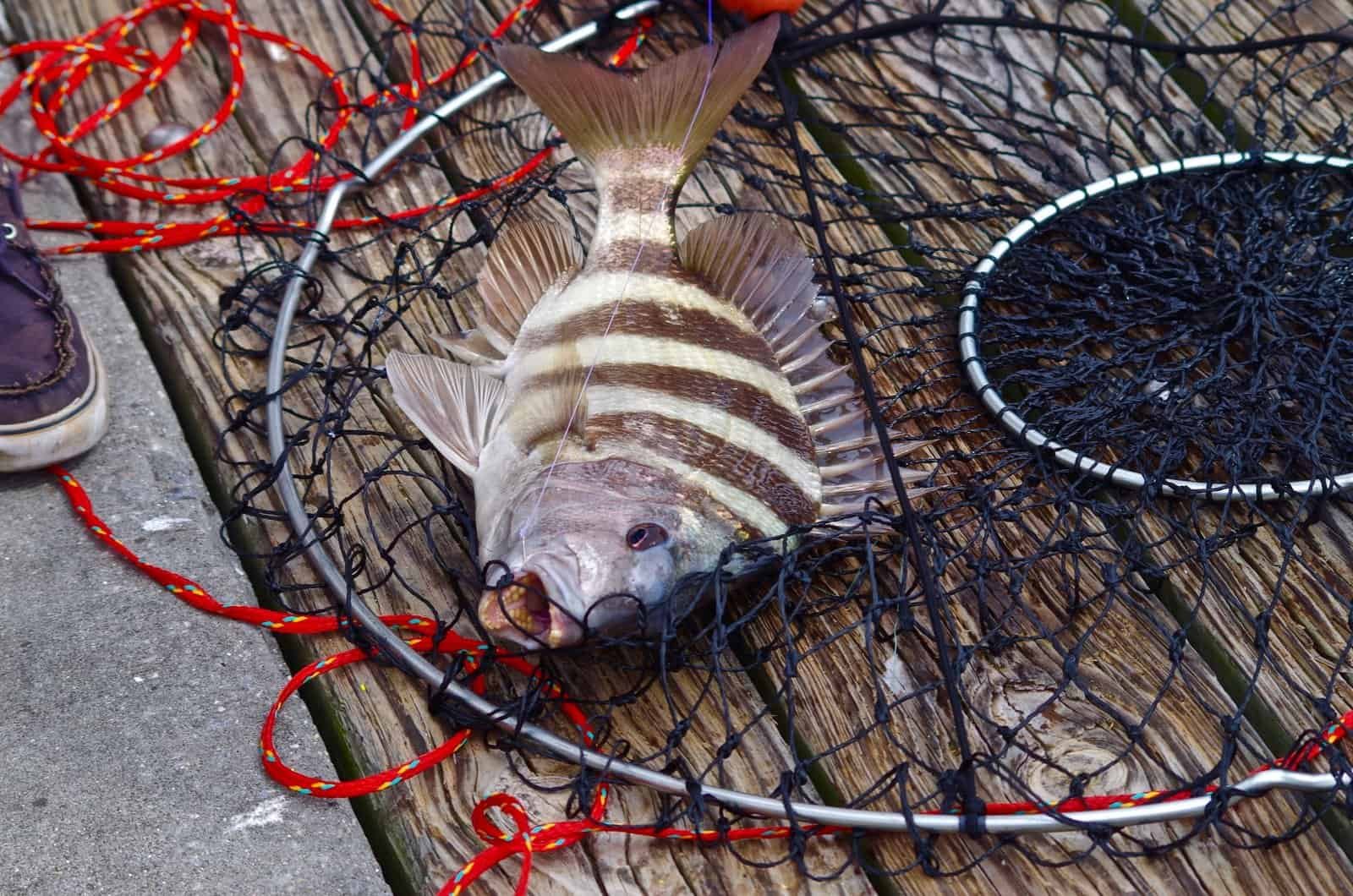
The sheepshead’s unusual teeth tell you almost everything you need to know about its diet.
Prominent front teeth allow the fish to scrape and pick food from structure, while powerful crushing teeth farther inside the mouth help process hard-shelled prey.
Common forage includes:
- Fiddler crabs
- Small crabs
- Shrimp
- Barnacles
- Oysters
- Mussels
- Marine worms
- Small crustaceans
This explains why sheepshead are so closely associated with docks, bridges, oyster bars, seawalls, rocks, jetties, and piers.
Those structures aren’t simply places for fish to hide.
They’re feeding areas.
Fiddler Crabs for Sheepshead
Fiddler crabs are one of the classic sheepshead baits.
They’re small, naturally occurring around marshes and shorelines, and closely match the crustacean-based diet sheepshead are adapted to eat.
They can be especially effective around:
- Bridge pilings
- Docks
- Oyster bars
- Seawalls
- Jetties
- Pier pilings
The goal is usually to keep the crab close to the structure without making the presentation unnecessarily complicated.
How to Present a Fiddler Crab
The amount of weight needed depends on depth and current.
In shallow or relatively calm water, a light presentation may be sufficient.
Around deep bridge or pier pilings with strong tidal flow, additional weight may be required to keep the bait in the strike zone.
The principle remains the same:
Use enough weight to maintain control, but no more than necessary.
Too much weight can make the presentation less natural and make subtle bites more difficult to interpret.
Shrimp for Sheepshead
Shrimp are another highly effective and widely available sheepshead bait.
They’re especially useful when fishing:
- Docks
- Bridges
- Oyster bars
- Seawalls
- Creek mouths
- Piers
Shrimp can be presented near the bottom, drifted beside structure, or lowered vertically along pilings.
One advantage of shrimp is that almost every Florida inshore predator will eat one.
That can also be a disadvantage if you’re specifically targeting sheepshead.
Redfish, snapper, trout, pinfish, and numerous other species may reach the shrimp first.
Still, when sheepshead are actively feeding, shrimp remain one of the most dependable choices.
Barnacles for Sheepshead
Barnacles are closely associated with sheepshead habitat.
Look at an old bridge piling, dock, seawall, or pier and you’ll often see exactly why the fish are there.
Barnacles and other marine growth create a natural feeding station.
In some sheepshead fisheries, anglers use barnacles directly as bait or take advantage of disturbed barnacles to create feeding activity around structure.
More importantly, their presence tells you something about the location.
A piling covered in mature marine growth is generally much more interesting than a clean piece of structure with little obvious food available.
Fishing Tip: Even if you aren’t fishing with barnacles, use them as a clue when choosing which pilings or pieces of structure deserve your attention.
Other Crab Baits
Sheepshead aren’t limited to fiddler crabs.
Other small crabs can also resemble natural forage, depending on what’s available and legal to use in the area you’re fishing.
The important characteristics are:
- Appropriate size
- Natural appearance
- Durable presentation
- Ability to remain near structure
This is also why artificial crab imitations make sense.
You’re reproducing a type of forage sheepshead are already actively searching for.
Can You Catch Sheepshead on Artificial Lures?
Yes.
Natural bait dominates many sheepshead conversations because it works extremely well, but sheepshead can absolutely be caught using artificial presentations.
The key is changing how you think about a “lure.”
You’re generally not trying to make a sheepshead chase something twenty feet across open water.
You’re trying to imitate a small crustacean feeding or moving around the structure where the fish already expects to find food.
That means artificial lure fishing for sheepshead is often:
Slow.
Precise.
Close to structure.
Bottom-oriented.
Soft plastic crabs, shrimp imitations, and compact jigs are the logical starting points.
Soft Plastic Crabs for Sheepshead
Of all the artificial lure categories, soft plastic crabs may provide the most natural connection to sheepshead feeding behavior.
Try a Fiddler Crab Imitation
Baitlicious Happy Claws is a 2.5-inch soft plastic fiddler crab designed for crustacean-feeding inshore species such as sheepshead, redfish, and black drum. Each pack contains both left- and right-claw versions for a varied natural profile.
View Happy Claws
Sheepshead regularly encounter small crabs around:
- Oyster bars
- Bridge pilings
- Dock pilings
- Rocks
- Seawalls
- Marsh edges
- Piers
The mistake is fishing a crab imitation like a swimbait.
Crabs don’t normally race through the water in a straight line.
Use a controlled presentation.
Small hops, subtle movements, slow drops, and occasional pauses can create a much more natural appearance.
Fishing Crab Imitations Around Pilings
Position the lure close to the piling and allow it to fall through the feeding zone.
Don’t automatically drop straight to the bottom.
Sheepshead may be feeding on marine growth several feet above it.
Work the entire water column until you determine where fish are holding.
Fishing Crab Imitations Around Oysters
Use enough weight to maintain control while avoiding excessive contact with the shell.
Short movements along submerged oyster edges can imitate a small crab moving through the structure.
Check the leader frequently.
Oyster shell can quickly damage fishing line.
Soft Plastic Shrimp for Sheepshead
Artificial shrimp provide another versatile option.
They work particularly well when presented vertically around structure or allowed to move naturally with tidal current.
Try them around:
- Dock pilings
- Bridge supports
- Oyster edges
- Seawalls
- Pier pilings
Avoid excessive action.
A shrimp imitation doesn’t need to constantly jump several feet through the water.
Small twitches followed by a controlled fall often create a more natural presentation.
Small Jigs for Sheepshead
Compact jigs allow anglers to place a small profile directly into the sheepshead’s feeding zone.
They become particularly useful around deeper structure or stronger current where an unweighted presentation becomes difficult to control.
The jig itself can be tipped or paired with a crab or shrimp imitation depending on the technique.
The key is choosing the correct weight.
Choosing Jig Weight for Sheepshead
Jig weight is one of the most important—and frequently overlooked—parts of sheepshead fishing.
You need enough weight to maintain control.
But that’s all you need.
Water Depth
Deeper water generally requires more weight to reach the desired depth.
Current
Strong tidal current may sweep a light presentation away from the piling or structure you’re trying to fish.
Increase weight until you regain control.
Wind
Wind creates additional line movement and can make bite detection more difficult.
A slightly heavier presentation may improve contact.
Line Angle
If your line is sweeping far away from the structure, you may not be fishing where you think you are.
Adjust your position or weight.
Structure
Heavy weights around oyster shell and rocks can increase snagging.
Use the lightest presentation that lets you effectively fish the strike zone.
Sheepshead Rule: If conditions change, don’t be afraid to change jig weight.
The correct weight at the beginning of an incoming tide may be completely wrong when the current starts ripping an hour later.
Best Baits for Sheepshead by Habitat
Instead of asking for one universal best bait, match the presentation to the structure.
Docks
Start with:
Fiddler crabs, shrimp, soft plastic crabs, and shrimp imitations.
Keep the presentation tight to productive pilings.
Bridges
Try:
Fiddler crabs, crabs, shrimp, and compact weighted jigs.
Depth and current control become especially important.
Oyster Bars
Use:
Crabs, shrimp, soft plastic crab imitations, and compact jigs.
Focus on submerged edges, cuts, points, and current seams.
Seawalls
Crabs and shrimp are natural choices.
Fish close to areas showing barnacles, oysters, and other marine growth.
Piers
Fiddler crabs, shrimp, crab imitations, and small jigs can all work.
Don’t overlook vertical presentations directly beside the pilings.
Jetties
Crabs and shrimp are excellent starting points around rocky structure.
Use enough weight to maintain control without constantly wedging the rig into rocks.
Matching the Structure
With sheepshead, “matching the hatch” isn’t always about seeing schools of baitfish.
Look at the structure.
What is living there?
A piling covered with barnacles and small crabs tells you something.
So does an oyster bar loaded with crustacean life.
Your lure should make sense in that environment.
A small crab slowly moving beside an oyster-covered piling looks like it belongs there.
That’s much more important than selecting an artificial lure simply because it has a flashy color or aggressive action.
Best Sheepshead Lure Colors
Sheepshead lure color doesn’t need to become complicated.
Start with natural crustacean colors:
- Brown
- Olive
- Green pumpkin
- Tan
- Gray
- Natural shrimp
- Dark green
In clearer water, subtle and natural colors make excellent choices.
As visibility decreases, darker colors can create additional contrast.
Small chartreuse or brighter accents can also increase visibility when needed, but there’s rarely a reason to turn a natural crab presentation into something excessively bright unless conditions call for it.
Presentation and location generally matter more than exact color.
Detecting a Sheepshead Bite
The best bait in Florida won’t help if you don’t recognize when the fish eats it.
Sheepshead bites can be extremely subtle.
You may feel:
- A light tap
- A slight vibration
- Added weight
- The lure stop falling
- The line move sideways
- Something simply feel different
Maintain contact without creating so much tension that the presentation becomes unnatural.
When something changes, be ready.
This is especially important with artificial lures because anglers accustomed to aggressive redfish or bass strikes may wait for a “thump” that never arrives.
Natural Bait vs. Artificial Lures
There’s no need to pretend artificial lures always outperform natural bait for sheepshead.
They don’t.
Fiddler crabs and shrimp are popular because they naturally match what sheepshead eat and can be extremely effective.
Artificial lures offer different advantages.
They can be:
- Reusable
- Easy to store
- Convenient to carry
- Quickly changed
- Precisely rigged
- Available when live bait isn’t
- Effective for anglers who prefer artificial-only fishing
The best approach depends on how you want to fish.
More importantly, anglers who understand why natural bait works become better at presenting artificial imitations.
You’re not trying to convince a sheepshead that a piece of plastic is food through magic.
You’re reproducing the size, profile, location, and movement of prey the fish already expects to encounter.
Common Sheepshead Bait & Lure Mistakes
Using Too Much Weight
More weight isn’t automatically better.
Use enough to maintain control and reach the strike zone.
Fishing Too Far From Structure
If the fish are feeding on a piling, a lure six feet away may be six feet too far.
Too Much Lure Movement
Crabs and shrimp don’t need an aggressive bass-fishing retrieve.
Slow down.
Always Fishing the Bottom
Sheepshead can feed at different depths along vertical structure.
Work the entire piling.
Waiting for a Hard Strike
Learn to recognize changes in pressure and line movement.
Ignoring the Current
A good bait in the wrong current position may never reach the fish.
Never Changing Jig Weight
Tidal current changes throughout the day.
Your rig should change with it.
What Is the Best Bait for Sheepshead?
If you want the simplest answer, small crabs—particularly fiddler crabs—are among the classic sheepshead baits, with shrimp also providing an extremely versatile option.
But consistently catching sheepshead requires more than choosing the right bait.
A perfect fiddler crab ten feet away from the feeding zone may be ignored.
A well-presented crab imitation placed beside a barnacle-covered piling can get eaten.
Think about the entire presentation:
Food + Structure + Current + Depth + Placement.
When those pieces come together, bait selection becomes much easier.
Sheepshead Bait & Lure FAQ
What is the best bait for sheepshead in Florida?
Fiddler crabs are among the classic choices because crabs are a natural part of the sheepshead diet. Shrimp and other small crustaceans can also be highly effective.
Can you catch sheepshead with artificial bait?
Yes. Soft plastic crab and shrimp imitations can catch sheepshead when presented naturally around docks, bridges, oysters, seawalls, rocks, and piers.
What is the best artificial lure for sheepshead?
A compact crab imitation is an excellent starting point because it closely matches natural sheepshead forage. Shrimp imitations and small jigs are also productive.
What color lure is best for sheepshead?
Natural crustacean colors such as brown, olive, green pumpkin, tan, gray, and natural shrimp patterns are good starting choices. Presentation is generally more important than exact color.
Should I fish for sheepshead on the bottom?
Sometimes, but not always. Around bridge, dock, and pier pilings, sheepshead may feed on marine growth at several depths. Work the water column rather than automatically dropping every presentation to the bottom.
How much weight should I use for sheepshead?
Use the lightest weight that still allows you to maintain control and keep the presentation in the strike zone. Depth and tidal current determine how much weight is necessary.
Why do sheepshead keep stealing my bait?
Sheepshead can manipulate and consume small prey without producing an obvious strike. Maintain contact with the bait and learn to recognize subtle changes in pressure rather than waiting for a hard bite.
Explore More Sheepshead Fishing Guides

Fishing Docks for Sheepshead
Learn how to identify productive dock pilings using marine growth, current, depth, shade, and precise bait or lure placement.
Fishing Bridges for Sheepshead
Discover how to target sheepshead around bridge pilings, current breaks, deeper channels, and changing tidal flow.
Fishing Oyster Bars for Sheepshead
Learn how sheepshead use oyster edges, points, cuts, and tidal current to find crabs, shrimp, and other forage.
Florida Sheepshead Fishing
Return to our complete Florida Sheepshead Fishing Guide for habitat, feeding behavior, tides, seasons, tackle, and fishing techniques.