Don't miss our holiday offer - 20% OFF!

East Coast Florida Redfish Fishing
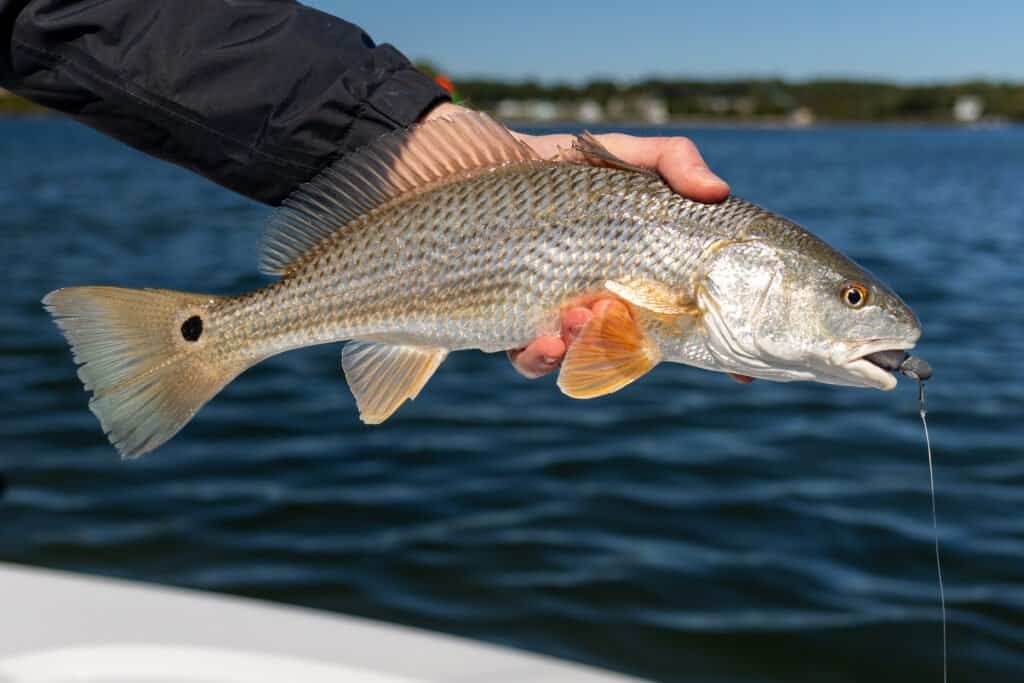
Florida’s Atlantic Coast offers some of the most diverse redfish fishing in the state.
From the shallow waters of the Indian River Lagoon system to the oyster-lined tidal creeks and salt marshes of Northeast Florida, anglers can target redfish across dramatically different environments without ever leaving the Atlantic side of the peninsula.
In east-central Florida, shallow lagoons provide opportunities to sight fish cruising and tailing redfish across flats, shorelines, and backwater areas. Travel north toward Jacksonville and the fishery becomes increasingly influenced by stronger tides, salt marshes, oyster bars, creeks, river systems, and the Intracoastal Waterway.
Redfish can also be reached without a boat. Bridges, causeways, public shorelines, piers, and other access points can put anglers within casting distance of productive structure and moving water.
The habitats may change, but the fundamentals remain the same:
Find food, structure, comfortable water, and favorable current, and you’ll find places worth searching for redfish.
For a broader look at redfish habitat, behavior, seasons, lures, and techniques throughout the state, visit our Florida Redfish Fishing Guide.
Why Florida’s Atlantic Coast Is Excellent Redfish Water
Florida’s East Coast contains an extensive network of lagoons, rivers, tidal creeks, marshes, flats, oyster beds, shorelines, bridges, and developed waterways.
Redfish use these environments throughout their lives.
Depending on where you’re fishing, productive habitat may include:
- Shallow flats
- Seagrass
- Oyster bars
- Salt marshes
- Tidal creeks
- Lagoon shorelines
- Mangroves
- Docks
- Bridges and causeways
- Channels
- River mouths
- Intracoastal shorelines
These environments support shrimp, crabs, mullet, mud minnows, pinfish, and other forage redfish depend upon.
But East Coast Florida isn’t one uniform fishery.
Understanding the difference between lagoon redfish and strongly tidal coastal redfish is one of the keys to fishing this side of the state successfully.
Lagoon Redfish vs. Tidal Redfish
One of the biggest differences anglers encounter along Florida’s Atlantic Coast is the influence of tides.
Redfish living in shallow lagoon environments may behave differently from fish living around Jacksonville’s strongly tidal creeks and marshes.
Lagoon Redfish
In portions of the Indian River Lagoon system, anglers often focus heavily on:
- Water depth
- Wind
- Water clarity
- Temperature
- Bait movement
- Bottom structure
- Fishing pressure
Small changes in depth can be extremely important.
Fish may move between shorelines, flats, potholes, channels, and deeper basins as conditions change.
Strongly Tidal Redfish
In Northeast Florida, tidal movement can become one of the dominant factors controlling fish location.
Rising water provides access to marshes, oyster edges, and shallow creeks.
Falling water pulls forage toward deeper channels and creek mouths.
Here, understanding where the water is going can be just as important as knowing where the structure is located.
Sight Fishing for East Coast Redfish
Sight fishing is one of the techniques most closely associated with shallow-water redfish.
Instead of repeatedly casting into likely habitat, anglers search for individual fish or schools before making a deliberate presentation.
Look for:
- Tailing fish
- V-shaped wakes
- Subtle pushes
- Mud clouds
- Shadows
- Nervous bait
- Cruising fish
Good light and calm conditions make fish easier to see, but experienced anglers learn to recognize subtle clues even when the fish itself isn’t clearly visible.
Stealth becomes extremely important.
Shallow redfish can detect trolling motors, hull slap, heavy footsteps, dropped equipment, and poorly placed casts.
The objective isn’t to chase the fish.
Determine where it’s going and intercept it.
Fishing Shallow Flats
Large shallow flats can look featureless from above, but small differences frequently determine where redfish feed.
Concentrate on:
- Sandy potholes
- Grass edges
- Small depressions
- Channels
- Points
- Oyster patches
- Bait schools
- Bottom transitions
Even a difference of several inches in depth can influence fish movement in extremely shallow water.
Paddle tails, jerk shads, shrimp, crab imitations, spoons, and topwaters can all be effective depending on conditions.
When the water is exceptionally shallow, weedless and lightly weighted presentations help keep the lure above vegetation and reduce unnecessary disturbance.
Indian River Lagoon Redfish
The Indian River Lagoon is one of Florida’s best-known inshore fishing systems and stretches along a substantial portion of the state’s east-central coastline.
Its enormous size creates a wide variety of fishing environments.
Redfish may use:
- Shallow flats
- Shorelines
- Islands
- Channels
- Mangrove edges
- Docks
- Deeper basins
- Areas holding concentrated bait
Because the lagoon covers such a large area, conditions can vary significantly from one section to another.
Wind, rainfall, water clarity, salinity, forage, temperature, and habitat quality can all influence where fish concentrate.
Rather than thinking of the Indian River Lagoon as one fishing spot, think of it as a collection of interconnected redfish environments.
Future Guide: Indian River Lagoon Redfish Fishing
Mosquito Lagoon Redfish
Mosquito Lagoon has long been associated with shallow-water fishing and sight casting.
The combination of shallow habitat and redfish creates opportunities for anglers who enjoy locating fish before making the cast.
Stealth is especially important in skinny water.
Watch for tails, pushes, wakes, bait movement, and subtle disturbances.
When a fish is located, avoid casting directly at it.
Determine its direction of travel and place a shrimp, crab, jerk shad, or lightly weighted paddle tail ahead of the fish.
Allow the redfish to encounter the lure naturally.
Future Guide: Mosquito Lagoon Redfish Fishing
Banana River Redfish
The Banana River forms another major component of the east-central Florida lagoon system.
Shallow water, shorelines, flats, islands, docks, and deeper transitions can all provide redfish opportunities.
As with the surrounding lagoon systems, anglers should pay close attention to:
- Water depth
- Water clarity
- Wind
- Bait activity
- Temperature
- Bottom composition
When conditions permit, sight fishing can be particularly rewarding.
Future Guide: Banana River Redfish Fishing
Northeast Florida Redfish
Move north toward Jacksonville and the redfish fishery begins to look considerably different.
Salt marshes, oyster bars, tidal creeks, river systems, bridges, and stronger tidal movement become major parts of the equation.
This is classic current-oriented redfish fishing.
Instead of searching enormous shallow flats, anglers can often narrow their attention to places where tidal water naturally concentrates forage.
Look for:
- Creek mouths
- Oyster points
- Marsh drains
- Current seams
- Channel edges
- Deep bends
- Bridge structure
- Intersections between creeks
The tide constantly changes which locations are accessible and productive.
Jacksonville Redfish Fishing
The Jacksonville area offers a tremendous variety of redfish habitat.
The St. Johns River, Intracoastal Waterway, tidal creeks, salt marshes, oyster bars, bridges, docks, and nearby coastal waters create opportunities for boat, kayak, and shore anglers.
Tidal movement becomes especially important.
A creek mouth that appears relatively quiet during one stage of the tide may become a feeding station several hours later when water begins draining from the surrounding marsh.
Anglers who learn to move with the tide can significantly reduce the amount of unproductive water they fish.
Future Guide: Jacksonville Redfish Fishing
St. Johns River Redfish
The lower St. Johns River provides another distinct East Coast redfish environment.
This isn’t shallow lagoon sight fishing.
Depth, current, salinity, structure, tributaries, docks, bridges, and tidal movement all influence where redfish may be found.
Look for areas where:
- Creeks enter the river
- Current changes speed
- Channels meet shallower water
- Structure interrupts tidal flow
- Bait becomes concentrated
Weighted paddle tails, shrimp imitations, and bucktail jigs become increasingly useful when fishing deeper water and stronger current.
Future Guide: St. Johns River Redfish Fishing
Salt Marsh Redfish
Salt marshes provide some of the most interesting redfish opportunities in Northeast Florida.
As water rises, redfish can gain access to increasingly shallow areas where crabs, shrimp, and other forage are abundant.
During sufficiently high water, fish may move into flooded marsh habitat and feed in areas that were dry or nearly inaccessible only hours earlier.
As the tide falls, the pattern reverses.
Fish retreat toward:
- Marsh drains
- Creek mouths
- Oyster edges
- Channels
- Deeper bends
Understanding these movements can make redfish considerably more predictable.
Oyster Bars and Tidal Creeks
Oyster habitat becomes particularly important throughout much of Northeast Florida.
Oyster bars provide food and structure while also redirecting current.
Look for:
- Oyster points
- Cuts
- Submerged shell
- Current seams
- Creek intersections
- Drop-offs
Tidal creeks work like food-delivery systems.
On falling water, shrimp, crabs, baitfish, and other forage are pulled from shallow areas toward deeper channels.
Redfish frequently position where they can intercept that movement without sitting directly in the strongest current.
Soft plastic shrimp and crabs are excellent choices, while paddle tails and spoons can help locate more active fish.
East Coast Redfish and Tides
Tidal influence varies considerably along Florida’s Atlantic Coast, so local knowledge matters.
The basic principles remain useful.
Incoming Tide
Rising water gives redfish access to increasingly shallow habitat.
Fish may move toward:
- Marsh edges
- Oyster tops
- Shorelines
- Shallow creeks
- Flats
Follow the fish toward newly flooded feeding areas.
High Tide
High water can spread redfish across more habitat.
In marsh environments, fish may move surprisingly far into shallow flooded areas.
Concentrate on forage and subtle structure.
Outgoing Tide
Falling water often creates predictable feeding opportunities.
Focus on:
- Creek mouths
- Marsh drains
- Oyster points
- Channels
- Drop-offs
- Current seams
Instead of searching for fish across an entire marsh, identify where the water must eventually leave.
Low Tide
Low water concentrates redfish into fewer available areas.
Channels, creek bends, holes, and deeper edges become increasingly important.
Low tide is also an excellent opportunity to study structure that disappears when the water returns.
Wind and East Coast Redfish
Wind plays a particularly important role in shallow lagoon fishing.
It can affect:
- Water clarity
- Actual water depth
- Bait movement
- Boat drift
- Surface visibility
- Casting accuracy
A moderate wind may help conceal an angler and push bait toward a shoreline.
Too much wind can muddy shallow water or make sight fishing extremely difficult.
Wind direction also influences which shoreline receives concentrated bait.
Don’t automatically seek the calmest water.
Sometimes the windblown side is where the food—and the redfish—are located.
Best Artificial Lures for East Coast Redfish
East Coast redfish can be caught with a relatively small collection of versatile artificial lures.
Paddle Tail Swimbaits
Excellent for searching flats, shorelines, creek mouths, oyster edges, and deeper channels.
Use lighter rigging in shallow lagoon environments and increase weight when fishing stronger current.
Soft Plastic Shrimp
A highly versatile presentation for docks, marsh drains, creeks, oyster bars, and shallow flats.
Allowing a shrimp to move naturally with current can be particularly effective.
Soft Plastic Crabs
Excellent for tailing fish, flooded marshes, oyster habitat, and redfish feeding along the bottom.
Keep the presentation subtle.
Jerk Shads
Particularly useful in shallow water where a lightly weighted or weedless presentation can remain above grass and other structure.
Gold Spoons
Excellent search baits around shallow flats, marshes, and stained water.
Topwater Lures
Productive around active bait, shallow flats, mullet schools, and low-light feeding periods.
Bucktail Jigs
Useful around bridges, channels, deeper creeks, river structure, and stronger current.
East Coast Redfish by Season
Warming water increases forage activity and can move redfish onto shallow flats, shorelines, oyster edges, and creek systems.
Shrimp, paddle tails, jerk shads, and crab imitations are excellent choices.
Summer
Early mornings can provide productive shallow-water fishing before temperatures rise.
Shade, current, docks, deeper edges, and moving tidal water become increasingly important later in the day.
Topwater can be excellent around sunrise.
Fall
Bait activity can trigger aggressive redfish feeding.
Look for mullet schools, nervous water, surface activity, oyster points, creek mouths, and areas where predators can concentrate bait.
Paddle tails, topwaters, spoons, and jerk shads allow anglers to cover water.
Winter
Cold fronts can push redfish toward deeper and more temperature-stable water.
Creek holes, channels, deeper lagoon areas, and protected shorelines become increasingly important.
Sunny afternoons can warm shallow water and create opportunities for fish to move back onto flats.
Fishing the Intracoastal Waterway for Redfish
The Intracoastal Waterway provides another major East Coast fishing corridor.
Redfish may use adjacent:
- Docks
- Creek mouths
- Oyster bars
- Shorelines
- Mangroves
- Channels
- Bridges
Rather than fishing the main channel randomly, look for places where productive shallow habitat connects with deeper water.
Creek mouths and channel edges can become especially valuable during falling tides.
Boat traffic is another consideration.
Early mornings and quieter periods can provide easier fishing conditions in heavily traveled sections.
Bridge and Causeway Redfish
Bridges and causeways provide shore-accessible structure throughout Florida’s Atlantic Coast.
They create:
- Current breaks
- Shade
- Deep water
- Pilings
- Channel edges
- Baitfish concentrations
Redfish may hold near the bottom or along current seams created by bridge structure.
Shrimp imitations, paddle tails, and bucktail jigs are good artificial-lure choices.
Weight becomes important.
Use enough to reach the desired depth while maintaining a natural presentation.
Pier Fishing for East Coast Redfish
Atlantic Coast piers can also provide occasional opportunities for redfish, particularly where the structure intersects productive inshore habitat, channels, passes, or bait concentrations.
As with Gulf Coast pier fishing, don’t assume the deepest water at the end of the pier is automatically the best redfish water.
Investigate:
- Shoreline troughs
- First drop-offs
- Pilings
- Current seams
- Channel edges
- Bait schools
- Nearby inlets or passes
Redfish may move through relatively shallow water much closer to shore than many pier anglers expect.
Paddle tails, shrimp imitations, spoons, and bucktail jigs can all be useful depending on water depth and current.
Fishing East Coast Redfish Without a Boat
One advantage of developing a regional fishing strategy is recognizing that redfish aren’t exclusively a boating target.
Shore anglers can look for opportunities around:
- Causeways
- Bridges where fishing is permitted
- Public fishing piers
- Parks
- Seawalls
- Shorelines
- Inlets
- Creek access
- Wading areas where appropriate
The same fundamentals apply.
Look for structure, bait, current, depth changes, and access to productive habitat.
The ability to reach good water matters more than whether you’re standing on a boat deck.
Kayak Fishing for East Coast Redfish
Kayaks are particularly effective in shallow East Coast environments.
They provide quiet access to flats, marshes, creeks, shorelines, and backwater areas where larger boats may struggle.
This makes them especially useful for sight fishing.
But shallow water doesn’t automatically mean safe water.
Wind, tidal current, boat traffic, weather, distance, and changing water levels should all be considered before exploring unfamiliar areas.
Common East Coast Redfish Mistakes
Treating the Entire Coast the Same
Mosquito Lagoon and a Jacksonville tidal creek require different approaches.
Adjust to the local habitat.
Ignoring Tidal Movement
Particularly in Northeast Florida, water movement can determine where fish feed.
Follow the tide.
Making Too Much Noise
Shallow lagoon redfish can be extremely sensitive to boats and anglers.
Stealth matters.
Fishing Featureless Water
Find potholes, oyster points, creek mouths, edges, channels, bait, or some other reason for redfish to be there.
Using Too Much Weight
Heavy presentations can be unnecessary in shallow lagoon environments.
Use enough weight to maintain control—no more.
Chasing Visible Fish
Intercept cruising redfish instead of following them with the trolling motor.
Ignoring Wind
Wind can determine water clarity, depth, bait location, and your ability to sight fish.
Use it as information.
East Coast Florida Redfish FAQ
Where is the best redfish fishing on Florida’s East Coast?
The Indian River Lagoon, Mosquito Lagoon, Banana River, Jacksonville area, St. Johns River, Intracoastal Waterway, and numerous tidal creek and marsh systems all provide redfish opportunities. The best area depends on season, habitat, weather, and fishing style.
Is Mosquito Lagoon good for redfish?
Mosquito Lagoon is well known for shallow-water inshore fishing, including opportunities to sight fish redfish. Stealth, water conditions, and accurate presentations are particularly important.
Can you catch redfish around Jacksonville?
Yes. Jacksonville provides extensive redfish habitat including salt marshes, tidal creeks, oyster bars, the Intracoastal Waterway, and the lower St. Johns River.
What are the best lures for East Coast Florida redfish?
Paddle tails, shrimp imitations, soft plastic crabs, jerk shads, gold spoons, topwater lures, and bucktail jigs can all be effective. Choose the lure based on habitat, depth, forage, current, and fish behavior.
What tide is best for East Coast redfish?
Both incoming and outgoing tides can produce fish. Incoming water opens shallow feeding habitat, while outgoing water can concentrate redfish and forage around creek mouths, marsh drains, channels, and oyster structure.
Can I catch East Coast Florida redfish without a boat?
Yes. Bridges, causeways, public shorelines, piers, parks, and other legal access areas can provide opportunities. Look for moving water, bait, structure, and nearby depth changes.
Is sight fishing good on Florida’s East Coast?
Yes. Shallow lagoon systems can provide excellent sight-fishing opportunities when water clarity, sunlight, wind, and fish location cooperate.
Explore East Coast Florida Redfish Fishing
Mosquito Lagoon Redfish
Learn how to locate and sight fish redfish across one of Florida’s best-known shallow-water lagoon fisheries.
Indian River Lagoon Redfish
Explore redfish habitat, seasonal patterns, artificial lures, and fishing techniques throughout the extensive Indian River Lagoon system.
Jacksonville Redfish
Discover how tides, salt marshes, oyster bars, tidal creeks, and the Intracoastal Waterway shape Northeast Florida redfish fishing.
East Coast Florida Pier & Shore Fishing
Explore Atlantic Coast piers, bridges, causeways, and public shore-fishing opportunities for redfish and other Florida inshore species.
Florida Redfish Fishing
Return to our complete Florida Redfish Fishing Guide covering habitat, behavior, tides, seasons, artificial lures, and techniques throughout the state.